A prognosis is a doctor’s prediction about how your injury will heal and what your recovery may look like over time. It describes whether you are expected to fully recover, face lasting limitations, or need long-term care. In a personal injury case, your prognosis helps show the true value of your claim.
Welcome to another entry in our personal injury legal glossary. This series keeps growing with the medical terms that show up most often in injury claims. Andrew Kryder, Esq., founding partner of our personal injury law firm, explains these terms in plain language because clients ask about them all the time. Today, the focus is prognosis—what it means, what affects it, and why it matters for your case.
En este artículo
What Is a Prognosis?
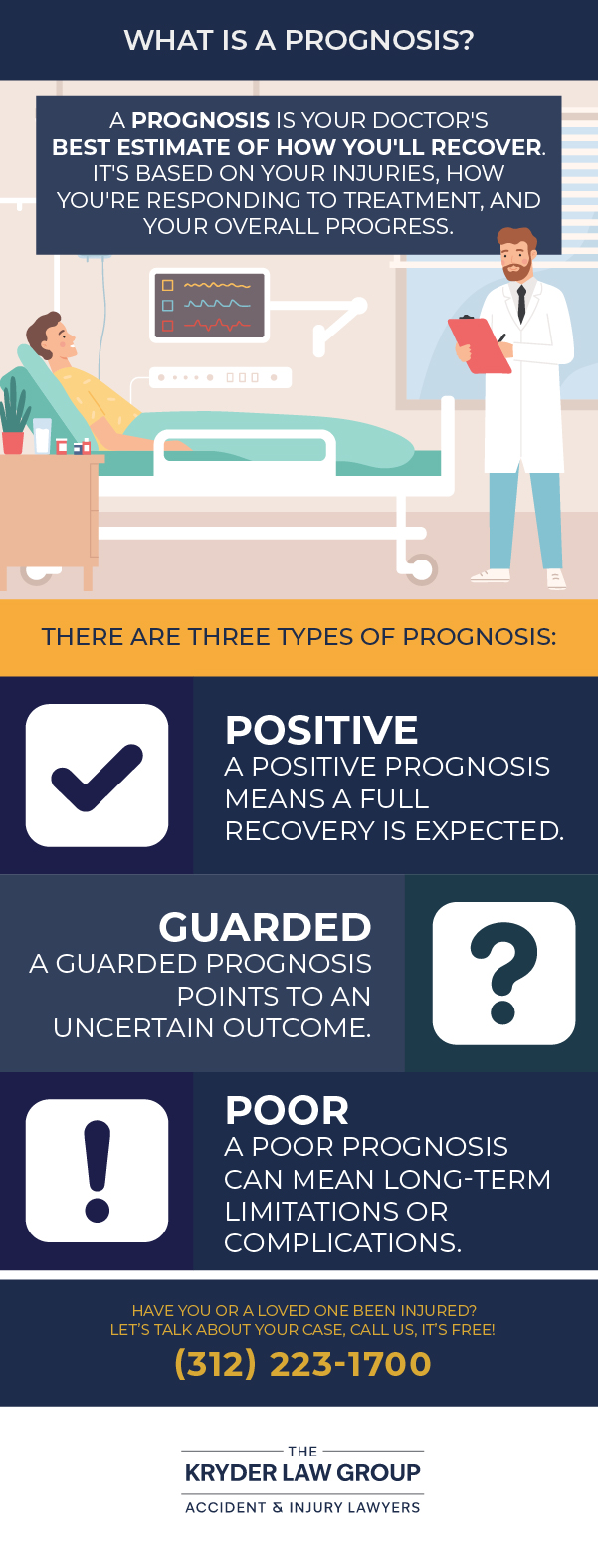
Think of a prognosis as your doctor’s long-term forecast for your recovery. By assessing your injuries, treatment response, and ongoing progress, your physician estimates how your health will evolve and what your life expectancy is. Ultimately, a prognosis helps patients make informed treatment decisions and allows families to build emotional preparedness during a challenging time.
These medical forecasts generally fall into three categories: positive, guarded, or poor. A positive prognosis means a full recovery is expected, while a guarded prognosis points to an uncertain outcome. Conversely, a poor prognosis warns of potential long-term limitations, permanent health complications, or severe disability, which may cause patients to decline invasive treatments.
In short, a medical diagnosis identifies what your injury is, but a prognosis reveals what to expect next. Beyond guiding personal injury claims, a prognosis can also play a vital medical role, such as determining eligibility for hospice care.
What Injuries or Conditions Relate to a Prognosis?
Almost any injury from an accident comes with a prognosis. Common examples include:
Back and neck injuries
Huesos rotos y fracturas
Head injuries, concussions, and traumatic brain injuries
Spinal cord damage
Soft tissue injuries like sprains and strains
Nerve damage that affects movement or feeling
The more severe the injury, the more critical a prognosis becomes in shaping treatment plans and predicting long-term patient outcomes.
What Types of Accidents May Involve a Prognosis?
A prognosis can come up in many kinds of personal injury claims, including:
Car crashes
Trucking accidents
Motorcycle wrecks
Slip and fall incidents
Construction accidents
Workers’ compensation claims
If your injuries need ongoing treatment, your healthcare professional’s prognosis often becomes a key part of your case.
Why Does a Prognosis Matter in a Personal Injury Case?
Your prognosis carries real weight because it helps show the full scope of your injuries. A clear prognosis tells everyone involved what your future may hold and whether you will recover fully or live with lasting effects.
This matters when it comes time to value your claim. A poor prognosis may mean future surgeries, ongoing therapy, or a reduced ability to work. Those costs should be part of any fair settlement. However, insurance companies may downplay a serious or uncertain prognosis to lower what they pay.
That is why it helps to have a personal injury lawyer review your medical records before you accept any offer. At The Kryder Law Group, LLC Accident and Injury Lawyers, we guide our clients through each step, so they understand what their prognosis means for their claim.
Preguntas frecuentes
Here are questions we often get from clients after an accident.
What is the difference between a diagnosis and a prognosis?
A diagnosis identifies your injury or condition. A prognosis predicts how that condition will change over time. In short, a diagnosis explains what is wrong, while a prognosis explains a predicted outcome and what to expect next.
Who decides my prognosis?
A licensed physician is required to determine prognosis. Your treating doctor usually makes this prediction based on factors called prognostic factors: your injuries, your response to treatment, and the medical evidence in your records. In some cases, an insurance company may request an independent medical examination (IME) to review or challenge the predicted functional outcome.
Can a prognosis change over time?
Yes. A prognosis is a prediction of a likely outcome, not a guarantee. As you continue treatment, your doctor may update your prognosis based on how your body responds. Some people improve more than expected, while others face setbacks.
How does a poor prognosis affect my settlement?
A poor prognosis often increases the value of a claim because it points to future medical costs and lasting limitations. Fair compensation should account for ongoing care, lost earning ability, and any permanent effects on your daily life.
Should I settle before my prognosis is clear?
It is often risky to settle before your prognosis is clear. Until you know your long-term outlook, it is hard to value future medical costs and permanent effects. Talk with your lawyer before accepting any offer.
Get Help Understanding Your Personal Injury Case
Your prognosis is an important part of your recovery, and knowing what it means can help you protect your claim. If you have questions about your prognosis or any part of your injury case, The Kryder Law Group, LLC Accident and Injury Lawyers is here to help. We handle car crashes, trucking accidents, slip and fall cases, workers’ comp, and more—and we can walk you through every step. Reach out today for a free case review.
Learn what a prognosis means in a personal injury case, how doctors predict recovery, and why it affects your claim.
¿Tengo motivos para presentar una demanda?
Dirección
134 North LaSalle St., Suite 1515, , Chicago, IL 60602 Cómo llegar
Acuerdos y sentencias
$7.5M
Se han conseguido 7,5 millones de dólares para un trabajador de la construcción que sufrió un accidente en la obra
$3M
Se han recuperado 3 millones de dólares para la familia de una persona atropellada por un camión de basura
$2.2M
Se han recuperado 2,2 millones de dólares para un comercial que resultó herido en un accidente de tráfico
$2M
Se han conseguido 2 millones de dólares para una persona que fue atropellada por un vehículo que circulaba a exceso de velocidad mientras esperaba el autobús de la CTA
$1.4M
Se han recuperado 1,4 millones de dólares para un programador informático que resultó herido tras sufrir un resbalón y una caída
$1M
Indemnización de 1 millón de dólares en solo 90 días para la familia de un hombre que falleció mientras ayudaba a un conductor que se había quedado tirado


 October 8th, 2026









 (312) 223-1700