

Si has sufrido un accidente de tren en Chicago, es importante que solicites asistencia jurídica a un abogado de lesiones personales lo antes posible. Los accidentes de tren pueden ser complejos, y las leyes que los regulan son diferentes de las que se aplican a otros tipos de accidentes. Cada uno de los abogados con experiencia en accidentes de tren de Chicago que forman parte de nuestro equipo de abogados especializados en lesiones personales conoce bien estas leyes y podrá ayudarle a afrontar el proceso legal.
En este artículo
¿Qué leyes regulan los accidentes ferroviarios?
Dado que Illinois es un nudo de comunicaciones ferroviario interestatal, los accidentes suelen implicar una compleja red de normativas tanto de Illinois como federales.
Legislación de Illinois
En Illinois, las empresas ferroviarias se clasifican como transportistas públicos. En virtud de la Ley de Responsabilidad de los Transportistas Públicos (740 ILCS 25/), están obligadas a prestar a los pasajeros el «máximo grado de diligencia» para garantizar su seguridad.
Supervisión federal
Las leyes como la Ley Federal de Seguridad Ferroviaria (FRSA), cuya aplicación corre a cargo de la Administración Federal de Ferrocarriles (FRA), exigen a los transportistas públicos —incluidos los trenes— que cumplan con normas de diligencia más estrictas que los conductores de vehículos no comerciales.
Los empleados de empresas ferroviarias que sufren lesiones en Illinois suelen quedar excluidos del régimen estatal de indemnización por accidentes de trabajo. En su lugar, sus reclamaciones se rigen por la Ley Federal de Responsabilidad de los Empresarios (FELA), en virtud del artículo 51 del título 45 del Código de los Estados Unidos (45 U.S.C. § 51). En virtud de la FELA, los empleados ferroviarios que sufren lesiones pueden reclamar una indemnización por los gastos médicos, la pérdida de ingresos y el daño moral.
¿Qué provoca los accidentes ferroviarios?
Según los datos de la FRA, el error humano (como el exceso de velocidad, los errores en el cambio de vía o el incumplimiento de las señales) es una de las principales causas de los accidentes ferroviarios y los descarrilamientos, y representa aproximadamente el 43 % de los incidentes en el área de Chicago.
Muchos accidentes se deben al incumplimiento de los protocolos obligatorios, como inspecciones inadecuadas, falta de formación o el incumplimiento de las zonas de velocidad limitada.
Además de los factores humanos, los defectos en la vía (como raíles rotos o soldaduras defectuosas), los fallos en los equipos (como averías en los frenos o en las ruedas) y los fallos en los sistemas de señalización automáticos (cuando varía la frecuencia de los mensajes de advertencia de seguridad) son causas técnicas de los accidentes.
Los incidentes en pasos a nivel y las intrusiones —en los que suelen estar implicados conductores negligentes que ignoran las señales o peatones que caminan por las vías— representan más del 95 % del total de lesiones y fallecimientos relacionados con el ferrocarril.
Los actos intencionados son uno de los principales factores que contribuyen a las muertes en las vías férreas. En Illinois, los estudios sugieren que los suicidios podrían representar más del 50 % del total de fallecimientos en las vías férreas.
¿Quién puede ser considerado responsable de los accidentes ferroviarios?
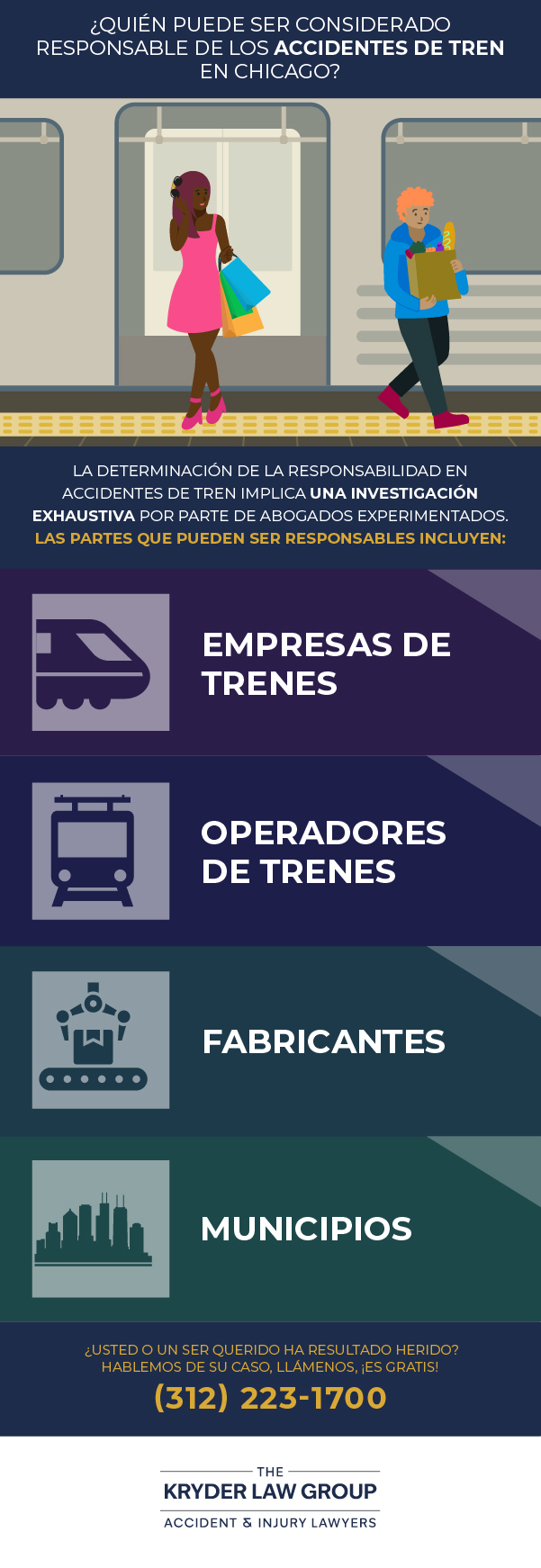
La responsabilidad por los accidentes ferroviarios suele recaer en varias partes, ya que en la explotación ferroviaria intervienen numerosas partes.
- Operadores ferroviarios: empleados y maquinistas externos encargados de la conducción segura del tren
- Los propietarios del material rodante, que se encargan de garantizar que los trenes y sus componentes se encuentren en buen estado de funcionamiento
- Los responsables de infraestructuras, encargados del mantenimiento de las vías, las señales y los pasos a nivel
- Los ayuntamientos, responsables del diseño y la seguridad de las zonas en las que las vías férreas se cruzan con las vías públicas
¿Qué empresas operan trenes en Chicago?

El servicio ferroviario es prestado por:
La Autoridad de Transporte de Chicago (CTA)
La CTA cuenta con una amplia red de transporte público y ofrece aproximadamente 1,6 millones de viajes en tren de pasajeros entre semana en toda la ciudad de Chicago, Illinois. Dispone de 224,1 millas de vías, una red de 20 cruces, 1.480 vagones, ocho líneas y 145 estaciones.
Los accidentes en los que se ven implicados vehículos de la CTA plantean retos jurídicos específicos, como plazos concretos y la inmunidad gubernamental.
Metra
La línea de tren Metra presta servicio a los viajeros de Chicago y sus alrededores. Cuenta con una media de aproximadamente 300 trenes entre semana que dan servicio a unas 100 localidades.
Amtrak
Amtrak es el servicio nacional de trenes interurbanos de pasajeros de Estados Unidos, que opera más de 300 trenes al día con destino a más de 500 lugares.
¿Quiénes son las víctimas de los accidentes de tren en Chicago?

Entre las personas que resultan heridas en accidentes en los que se ven implicados trenes se encuentran:
- Pasajeros de los trenes de la CTA, Metra y Amtrak (y otros trenes)
- Peatones y conductores de un coche u otro vehículo que han chocado en las vías del tren en los pasos a nivel
- Empleados de la ciudad de Chicago o de otros municipios
- Trabajadores ferroviarios lesionados en el trabajo que están cubiertos por la FELA
Lesiones habituales en accidentes de tren
Cuando se producen accidentes ferroviarios, las víctimas pueden sufrir lesiones graves y catastróficas, o incluso la muerte, debido al enorme tamaño y a las altas velocidades de los trenes. Entre las lesiones graves se incluyen fracturas óseas múltiples, laceraciones, quemaduras, contusiones, lesiones cerebrales traumáticas y lesiones en el cuello y la espalda. Las muertes pueden ser devastadoras para las familias.
Hay un tiempo limitado para actuar después de accidentes de tren en Chicago
En Illinois, el plazo de prescripción habitual para los daños personales (735 ILCS 5/13-202) y la muerte por negligencia (740 ILCS 180/2) es de dos años, pero las reclamaciones contra entidades públicas (como las relacionadas con Metra o la CTA) tienen un plazo significativamente más corto, de un año, y requisitos estrictos de notificación (745 ILCS 10/8-101).
¿Qué daños y perjuicios pueden recibir las víctimas de accidentes ferroviarios?

En Illinois, por lo general, no existen límites máximos en cuanto a la indemnización que puedes recibir en un caso de accidente de tren. La indemnización económica puede incluir tanto pérdidas económicas como no económicas, cubriendo las graves dificultades físicas, emocionales y económicas a las que tú y tu familia podáis tener que hacer frente. La empresa ferroviaria y su compañía de seguros intentarán limitar tu reclamación; ahí es donde nuestros abogados especializados en accidentes de tren de Chicago pueden ayudarte a luchar por la indemnización íntegra que te mereces.
La parte perjudicada en un caso de accidente ferroviario puede recibir una indemnización que incluya:
- Daños económicos: son las pérdidas económicas directas que has sufrido (como facturas médicas, gastos de rehabilitación y asesoramiento psicológico, salarios no percibidos y daños materiales).
- Daños no económicos: estos daños abarcan las consecuencias personales de tus lesiones (como el dolor y el sufrimiento, la discapacidad, las cicatrices y la desfiguración, y la pérdida del disfrute de la vida).
¿Tendré que ir a juicio por mi caso de accidente de tren?
Según la Asociación Americana de Abogados (ABA), la mayoría de los casos nunca llegan a los tribunales. Los abogados de nuestro bufete especializados en accidentes ferroviarios en Chicago son excelentes negociadores, pero si no se puede llegar a un acuerdo en un caso complicado, estamos totalmente preparados para llevar tu demanda por accidente de tren ante los tribunales.
¿Cuánto vale mi reclamación por accidente de tren?
Las indemnizaciones por accidentes ferroviarios graves en Illinois suelen ascender a varios millones de dólares debido al carácter catastrófico de las lesiones. Por ejemplo:
- 43 millones de dólares por un accidente ferroviario de Metra ocurrido en 2020 en el que falleció un peatón y resultaron gravemente heridos tres ocupantes de un coche que se encontraban en las vías del tren
- 33 millones de dólares por una muerte por negligencia provocada por una maniobra ferroviaria peligrosa
- 22,5 millones de dólares por lesiones y muerte por negligencia en un descarrilamiento de Canadian National ocurrido en Rockford en 2009
- 29,6 millones de dólares para un pasajero herido en un descarrilamiento de Metra
- 12,25 millones de dólares por una colisión de Metra en 2015
El valor de los casos de accidentes ferroviarios y la indemnización a la que podrías tener derecho dependerán de las circunstancias concretas de tu situación, como la gravedad de tus lesiones y el tiempo que hayas estado de baja laboral. Las indemnizaciones por reclamaciones en virtud de la FELA presentadas por empleados ferroviarios o del personal de tren también difieren de los casos de daños personales de otras víctimas lesionadas.
Cómo podemos ayudarte
Las compañías de ferrocarriles y el tren en el que viajaba cuando se lesionó suelen ser propiedad de una agencia gubernamental, que también se encarga de su funcionamiento. La ciudad de Chicago tendrá abogados listos para impugnar su caso y disputar su relato de los hechos. Mientras se recupera de lesiones graves, es posible que no esté en condiciones de representarse a sí mismo contra la industria ferroviaria para demostrar la negligencia del ferrocarril.
Gracias a nuestro profundo conocimiento de la legislación sobre accidentes ferroviarios (incluida la ley FELA para empleados), las lesiones de los trabajadores ferroviarios y las reclamaciones por daños personales, nos comprometemos a gestionar los trámites legales y a librar las batallas judiciales para que tú puedas centrarte en tu recuperación.
Llámanos para una consulta gratuita
Protegeremos tus derechos y trabajaremos con diligencia para conseguir una indemnización completa y justa por tus lesiones físicas. Nuestro bufete de abogados ofrece una consulta gratuita; un abogado con experiencia en accidentes de tren de Chicago abogado de lesiones personales analizará tu caso de accidente de tren, te explicará tus opciones para obtener una indemnización y responderá a tus preguntas.










 (312) 223-1700