

If your loved one was harmed while living in a group home, you might feel shocked, angry, and unsure of what to do. An Illinois group home abuse lawyer at our personal injury firm can help you seek justice. We represent those who have been abused or neglected by caregivers or other residents in group homes across Cook County and throughout Illinois.
In this Article
What Is a Group Home in Illinois?
In Illinois, a group home is a state-licensed residential facility that provides 24-hour care, supervision, and specialized services for people who cannot live independently. Under Illinois law, these homes are not just residences; they are regulated “provider agencies” that owe a legal duty of care to their residents.
Group homes are generally divided into two legal categories:
Adult Community Integrated Living Arrangements (CILAs)
The CILA Licensure and Certification Act defines these as homes for eight or fewer individuals where adults with mental illness or developmental disabilities live. They are overseen by the Illinois Department of Human Services (IDHS).
Child Group Homes
Under the Child Care Act of 1969, a group home is a facility that provides care for five to ten children. These are licensed and strictly monitored by the Department of Children and Family Services (DCFS).
Are Illinois Nursing Homes Group Homes?
No, nursing homes are not considered group homes. Unlike group homes, which serve a small number of residents, nursing homes provide long-term care for elderly or disabled adults under the supervision of the Nursing Home Care Act (210 ILCS 45/). This act ensures that every nursing home resident receives proper care and protection from nursing home abuse, distinguishing these facilities from other types of residential care.
What Are the Rights of Illinois Group Home Residents?
In Illinois, group home residents—whether adults in CILA or children in residential care facilities—are protected by state laws that guarantee safety, dignity, well-being, and personal freedom.
Fundamental Protections for All
- Safety: right to be free from physical, mental, or sexual abuse and neglect
- Humane care: services must be provided in the least restrictive environment possible
- Privacy: right to private phone calls, uncensored mail, and private visits
- Property: right to keep and use personal clothing and belongings
- Health: right to refuse treatment (for adults) or receive physician-authorized care (for children)
Adult Rights (CILA)
Adults with developmental disabilities or mental health needs are primarily protected by the Illinois Mental Health and Developmental Disabilities Code.
- Financial control: right to manage their own money or choose their representative payee
- Access: freedom to access food, water, and common areas at any time
- Employment: no resident can be forced to work for the facility; all work must be paid at a fair wage
- Roommates: right to participate in choosing a roommate if sharing a bedroom
- Movement: freedom to enter and leave the community as outlined in their individual service plan
Children’s Rights in DCFS-Licensed Facilities
Children in residential homes are protected by the Foster Children’s Bill of Rights Act and DCFS licensing standards.
- Family bonds: right to maintain contact and visit with siblings and biological family
- Normalcy: right to participate in age-appropriate extracurriculars (sports, clubs, hobbies)
- Discipline: strict prohibition against corporal punishment or being locked in a room
- Court access: right to attend legal hearings and have a Guardian ad Litem (GAL) represent their interests
- Allowance: entitlement to a monthly allowance for personal use
What Are the Responsibilities and Standards for Illinois Group Homes?
Illinois group homes and similar care facilities are required to provide a supervised, safe, and supportive environment with trained staff who meet each resident’s individual needs. Care includes services like support with daily living, medication management, and promoting independence.
Facilities must properly screen and train staff, maintain adequate staffing, and respond to complaints.
They also have a duty to prevent resident-on-resident abuse. If staff fail to intervene when they know a resident poses a danger, it may be considered negligence. The core responsibility is to protect and treat all vulnerable residents with dignity.
What Is Group Home Abuse?
Physical and emotional abuse can take many forms, including:
- Physical abuse: using unnecessary restraint, including improper or excessive physical restraints, or force
- Emotional abuse: intimidation, humiliation, or verbal threats
- Neglect: denying residents adequate care, nutrition, or supervision
- Financial exploitation: misusing or stealing a resident’s funds or property
- Sexual abuse: sexual assault and any unwanted or coerced sexual activity
What Compensation Can Victims of Group Home Abuse Receive?
Compensation depends on the specifics of the case, the seriousness of the injuries, and the long-term impact on the resident. A claim can seek payment for medical bills—including future medical care—hospital stays, therapy, medication, and other costs related to the abuse.
Victims can also be compensated for their pain and suffering, emotional distress, and loss of a normal life. This is especially important in cases that involve emotional trauma or financial exploitation.
If the abuse results in serious injury, disability, or death, the financial compensation may be significant. In these situations, family members may also be able to file a wrongful death claim for damages, including medical expenses prior to death, funeral expenses, and burial expenses.
Signs of Group Home Abuse and Neglect
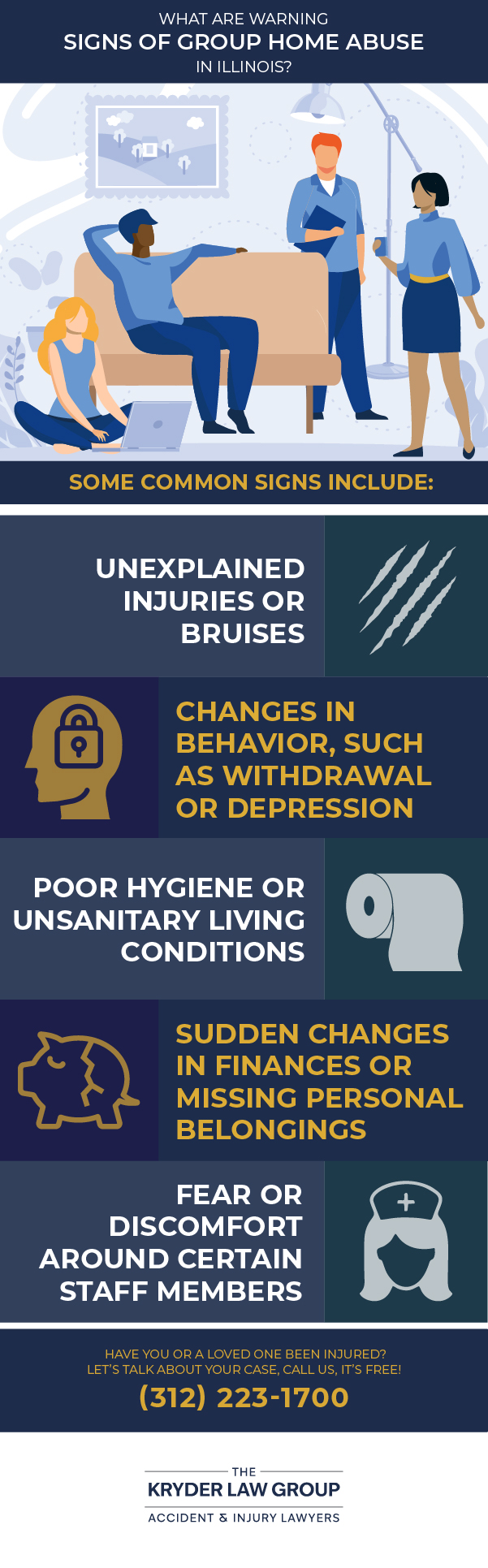
Families should take warning signs seriously. Physical signs can include unexplained bruises, burns, fractures, sudden weight loss, poor hygiene, bedsores, or repeated infections.
Behavioral changes may point to psychological abuse. A resident may become withdrawn, anxious, or fearful around certain people. They might flinch when touched or show sudden changes in mood.
Other signs of abuse can include unexplained genital injuries, missing money, or possessions that disappear. A pattern of incidents, even with simple explanations, may suggest serious neglect or abuse.
What to Do If You Suspect Abuse in an Illinois Care Home
If a resident is in immediate danger, call 911 or get medical attention from a medical professional. You should also report suspected abuse to the appropriate authorities.
- For CILA settings, this may include the IDHS Office of Inspector General (OIG) or Illinois Adult Protective Services (IDOA).
- For child group homes, contact DCFS.
Reporting the abuse can create an official medical record, prompt an investigation, and help protect other residents from harm. Finally, contact our law firm to discuss your options for seeking compensation for your loved one.
How Can an Experienced Attorney Help?
The legal process begins with a careful review of what happened. An attorney gathers evidence, such as records of medical treatment, incident reports, staffing logs, care plans, internal complaints, inspection findings, photographs, and witness statements. Because group home abuse and neglect are also critical public health concerns, this investigation helps determine if the injury resulted from abuse, neglect, lack of supervision, inadequate training of staff, poor hiring practices, or systemic resident safety failures.
After investigating the facts of the case, the lawyer may pursue an insurance claim, negotiate a settlement, or file a lawsuit against the responsible parties. This could include the facility, its management company, staff members, or contractors whose negligence contributed to the harm.
Strong group home abuse cases depend on not only showing that abuse happened but that it could and should have been prevented. Our legal team works to connect the warning signs, facility records, and injuries to the failures that caused them.
Call an Illinois Group Home Abuse Lawyer
If you believe your loved one has suffered harm in a negligent facility like a CILA home, group home, or nursing facility, do not wait for the situation to get worse to take legal action. Our firm can investigate what happened, explain your legal options for pursuing compensation, and help you pursue personal injury litigation.
Contact us today for a free consultation.










 (312) 223-1700