La jerga del ámbito jurídico puede resultar confusa: con demasiada frecuencia, la información importante se presenta de forma más complicada de lo necesario. El abogado Andrew Kryder, socio fundador de nuestro bufete especializado en lesiones personales, ha creado este Glosario legal para facilitar la comprensión de términos jurídicos complejos. En este artículo se explica qué es una citación judicial y se ofrecen ejemplos de cómo se utilizan.
En este artículo
¿Qué es una citación judicial?
Una citación judicial es una orden formal por escrito emitida por un organismo público o por un secretario judicial. Obliga legalmente a una persona a realizar una acción concreta. En la mayoría de los casos, esta acción consiste en testificar en un procedimiento judicial o en presentar pruebas materiales para un caso.
Una citación judicial es una orden legal que no se puede ignorar sin más. Si no cumples con esta orden, podrías enfrentarte a graves consecuencias legales, como multas o ser declarado en desacato al tribunal.
Tipos habituales de citaciones judiciales
No hay un único tipo de citación judicial. Dependiendo de lo que el tribunal o los abogados necesiten de ti, es posible que recibas un tipo concreto de orden. Entender el significado de dicha citación te ayuda a saber exactamente qué se espera de ti.
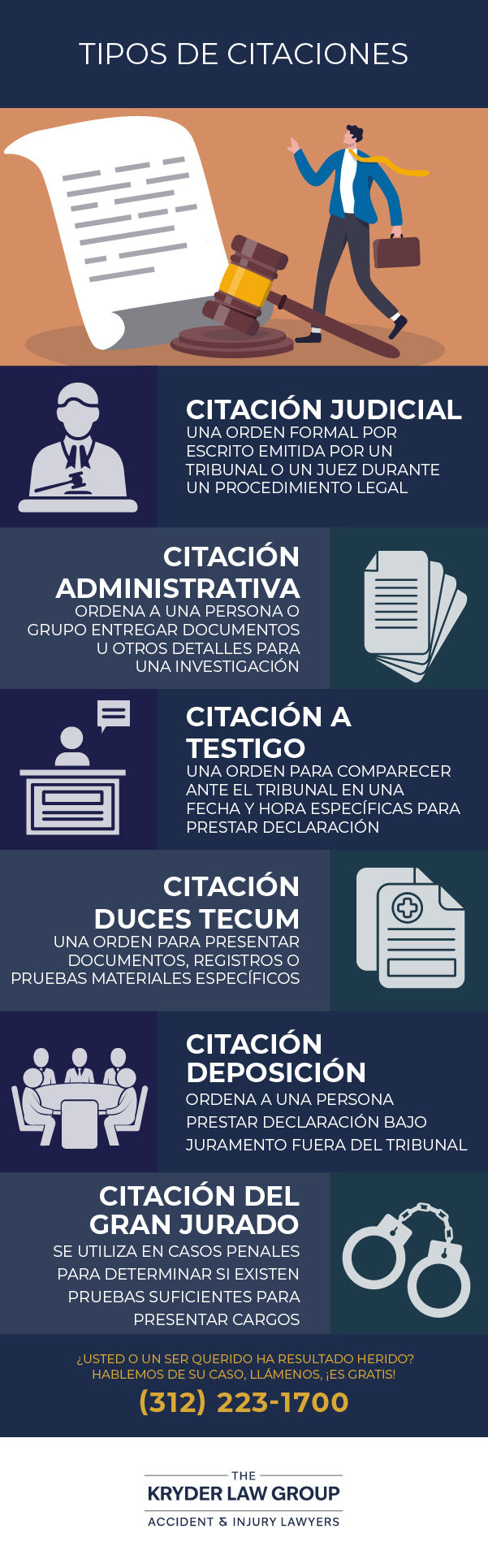
Citación judicial
Una citación judicial es una solicitud formal por escrito emitida directamente por un juez o un tribunal durante un procedimiento judicial. Este tipo de citación puede exigir a una persona que comparezca en una vista judicial, preste testimonio (citación ad testificandum) o presente documentos y pruebas fundamentales para un caso. Las citaciones judiciales constituyen un elemento clave de la autoridad del tribunal para recabar información y son exigibles por ley. Si recibes una citación judicial, es importante que la cumplas íntegramente y respondas dentro del plazo establecido.
Citación administrativa
Una citación administrativa es emitida por un organismo público y no por un tribunal. Estas citaciones se utilizan a menudo en asuntos regulatorios o de investigación y pueden exigir a una persona u organización que facilite documentos, presente registros o proporcione otra información relacionada con una investigación en curso.
Citación a un testigo
Una citación como testigo es una orden que le obliga a comparecer ante el tribunal en una fecha y hora concretas para testificar en un juicio o una vista. Si ha presenciado un accidente de tráfico o tiene conocimiento directo de un incidente con lesiones personales, los abogados pueden emitir una citación como testigo para que pueda relatar su versión de los hechos ante un juez o un jurado.
Citación con orden de presentación de documentos
Esta frase en latín se traduce aproximadamente como «presentar bajo pena de sanción». Te obliga a presentar documentos, registros o pruebas materiales específicos. En el caso de una demanda por daños personales, esto podría suponer entregar historiales médicos, correos electrónicos de la empresa, fotografías o declaraciones de ingresos. Es posible que tengas que testificar en persona o que no, pero es absolutamente obligatorio que facilites la documentación solicitada.
Citación para prestar declaración
Una citación para una declaración bajo juramento obliga a una persona a comparecer en un lugar y a una hora determinados para prestar testimonio bajo juramento fuera de la sala del tribunal, normalmente en un despacho de abogados. Este proceso forma parte de la fase de instrucción de un proceso judicial. Ambas partes recurren a la citación para una declaración bajo juramento con el fin de averiguar qué sabe un testigo antes de que comience el juicio propiamente dicho.
Citación del gran jurado
Las citaciones del gran jurado se utilizan en los procesos penales, en la fase de instrucción, para recabar pruebas y solicitar documentos o testimonios con el fin de determinar si existen motivos suficientes para presentar cargos formales.
Qué hacer si recibes una citación judicial
Recibir por correo o de manos de un agente judicial un documento legal, como una citación válida, puede provocar ansiedad, pero no hay motivo para alarmarse. El primer paso es leer el documento con atención. Toma nota de la fecha, la hora y el lugar concreto en el que debes presentarte (o de los documentos exactos que exige la citación).
No lo ignores. Ignorar una orden judicial solo te acarreará problemas aún mayores. Si no tienes claro qué es lo que te pide la parte solicitante, o si crees que facilitar la información solicitada podría perjudicarte, es importante que busques asesoramiento jurídico de inmediato.
Andrew Kryder, abogado, explica qué es una citación judicial y ofrece ejemplos de cómo se utilizan las citaciones judiciales.
¿Tengo motivos para presentar una demanda?
Dirección
134 North LaSalle St., Suite 1515, , Chicago, IL 60602 Cómo llegar
Acuerdos y sentencias
$7.5M
Se han conseguido 7,5 millones de dólares para un trabajador de la construcción que sufrió un accidente en la obra
$3M
Se han recuperado 3 millones de dólares para la familia de una persona atropellada por un camión de basura
$2.2M
Se han recuperado 2,2 millones de dólares para un comercial que resultó herido en un accidente de tráfico
$2M
Se han conseguido 2 millones de dólares para una persona que fue atropellada por un vehículo que circulaba a exceso de velocidad mientras esperaba el autobús de la CTA
$1.4M
Se han recuperado 1,4 millones de dólares para un programador informático que resultó herido tras sufrir un resbalón y una caída
$1M
Indemnización de 1 millón de dólares en solo 90 días para la familia de un hombre que falleció mientras ayudaba a un conductor que se había quedado tirado


 7 de abril de 2026









 (312) 223-1700