A deposition is sworn, out-of-court testimony given by a witness or party in a legal case. It is recorded, legally binding, and used by both sides to gather facts, assess credibility, and build their arguments before trial.
Legal terminology can be overwhelming when you’re navigating a personal injury case. Andrew Kryder, Esq., founding partner of our Midwestern personal injury law firm, developed this glossary as a straightforward guide to commonly used legal terms. In this entry, we break down what a deposition is, how it works in personal injury cases, and why it matters to your claim.
En este artículo
What Is a Deposition?
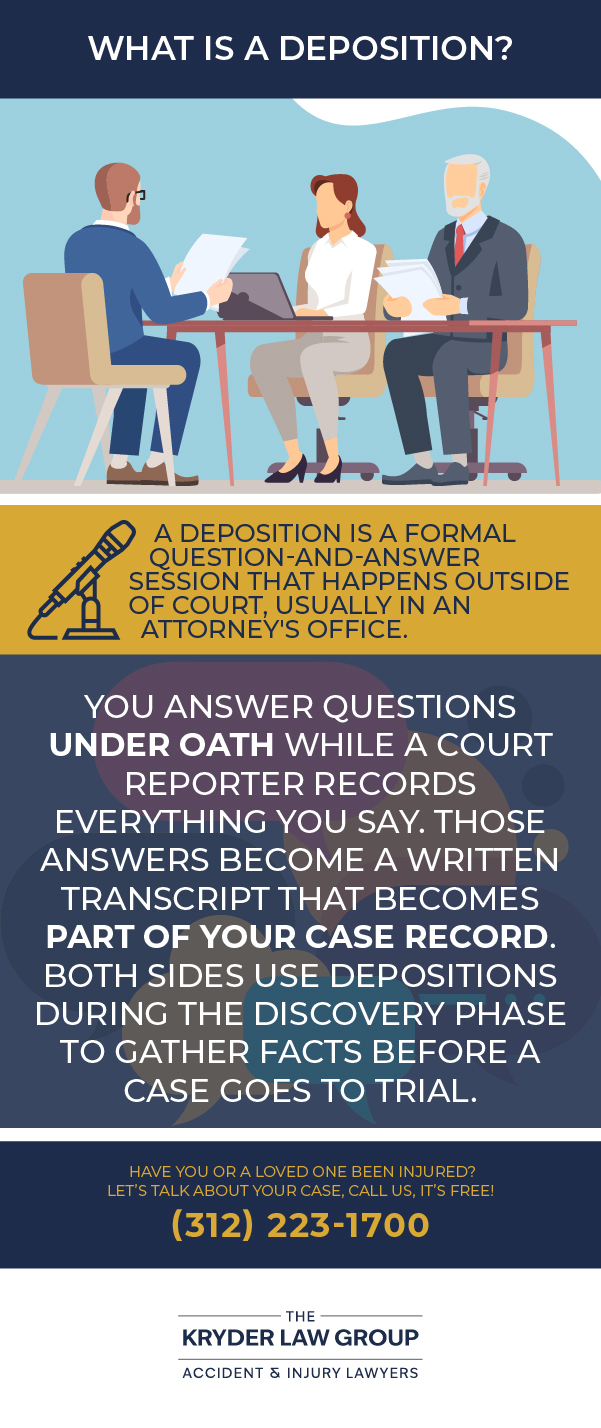
A deposition is a formal question-and-answer session that takes place outside of a courtroom. It is a critical legal proceeding conducted during the discovery phase of litigation. A witness, called a deponent, answers questions under oath, and everything said is recorded by a court reporter. The result is a written transcript that becomes part of the official case record.
Depositions occur during the discovery process of litigation before a case goes to trial. Both the plaintiff’s attorney and the defendant’s attorney have the opportunity to ask questions.
While depositions are most commonly used in civil procedures, they can also play a specialized role in criminal cases to preserve testimony when a witness may be unavailable for trial.
Types of Depositions
While most proceedings involve live oral examination, specific deposition rules also permit written depositions to gather information.
Oral depositions: the deponent appears in person or via video link to answer questions verbally.
Written depositions: instead of live examination, parties submit questions in advance; the deponent then appears before an authorized officer to read and answer those written questions under oath while a court reporter transcribes the responses.
Who Can Be Deposed in a Personal Injury Case?
Almost anyone with relevant knowledge of the case can be deposed. In a personal injury lawsuit, that typically includes:
The plaintiff—the injured person bringing the claim
The defendant—the person or party alleged to be at fault
Eyewitnesses—anyone who saw the incident occur
Medical providers—doctors or specialists who treated the plaintiff
Expert witnesses—professionals questioned during an expert’s deposition to offer opinion testimony on issues like accident reconstruction or the extent of injuries
What Happens During a Deposition?
Depositions usually take place in an attorney’s office. A court reporter is present to transcribe everything that is said. In some cases, electronic recordings (such as video) are also used to preserve the session.
The process generally follows these steps:
The deponent is sworn in. They take an oath to tell the truth, just as they would in a courtroom.
Attorneys ask questions. The questioning attorney leads the session, asking relevant deposition questions. During this time, opposing counsel may raise deposition objections to preserve the record regarding improper question formats or privilege.
The deponent answers. Answers must be given verbally since nods or gestures don’t appear in transcripts.
The deposition transcript is prepared. The court reporter produces a written record, which the deponent may review and correct.
Why Do Depositions Matter in Personal Injury Cases?
Depositions serve several important purposes. They allow attorneys to:
Lock in testimony: Recording a witness’s testimony under oath prevents sudden changes in stories during trial. If a witness changes their account later, the transcript can be used to challenge their credibility.
Uncover facts: Attorneys use depositions to learn what each witness knows. This can reveal new evidence or expose weaknesses in the opposing side’s case.
Assess credibility: Depositions show how a witness presents themselves under questioning. It can influence how attorneys approach settlement negotiations or trial strategy.
A deposition is not just preparation; it can directly shape the outcome of a personal injury claim.
What Should You Know Before Your Deposition?
If you are the plaintiff in a personal injury case, your attorney will prepare you before your deposition. A few key points to consider include:
Answer only what is asked. Keep responses concise and accurate. Volunteering extra information can create complications.
It’s okay to say you don’t know. Guessing is not required. If you don’t remember something, say so.
Everything is on the record. Your deposition testimony carries the same legal weight as testimony given in court.
Frequently Asked Questions About Depositions
Here are questions we often hear from clients who want to understand the legal term “deposition.”
What is the purpose of a deposition in a personal injury lawsuit?
A deposition gathers sworn testimony from witnesses and parties before trial. Personal injury attorneys use depositions to discover facts, pin down testimony, and evaluate the strength of each side’s case.
Can a deposition be used against me in court?
Yes. If your deposition testimony conflicts with what you say at trial, the opposing attorney can use the transcript to challenge your truthfulness. This is one reason careful, accurate, and complete answers are essential.
How long does a deposition take in a personal injury case?
The length varies and depends on the complexity of the case. A straightforward deposition may take an hour or two, while more complex cases involving multiple issues or detailed medical histories can take significantly longer. Federal rules require depositions to last no longer than seven hours per day, and witnesses can request breaks during depositions for various needs.
Do I have to attend a deposition?
If you are a party to the lawsuit, such as the plaintiff, you are generally required to appear. Witnesses may be compelled to attend through a subpoena.
What happens after a deposition?
The court reporter prepares a written transcript. Both sides review the testimony as they continue building their case. Depositions often play a role in settlement discussions or trial preparation.
Learn what a deposition is, how it works in personal injury cases, who can be deposed, and why deposition testimony matters to your claim.
¿Tengo motivos para presentar una demanda?
Dirección
134 North LaSalle St., Suite 1515, , Chicago, IL 60602 Cómo llegar
Acuerdos y sentencias
$7.5M
Se han conseguido 7,5 millones de dólares para un trabajador de la construcción que sufrió un accidente en la obra
$3M
Se han recuperado 3 millones de dólares para la familia de una persona atropellada por un camión de basura
$2.2M
Se han recuperado 2,2 millones de dólares para un comercial que resultó herido en un accidente de tráfico
$2M
Se han conseguido 2 millones de dólares para una persona que fue atropellada por un vehículo que circulaba a exceso de velocidad mientras esperaba el autobús de la CTA
$1.4M
Se han recuperado 1,4 millones de dólares para un programador informático que resultó herido tras sufrir un resbalón y una caída
$1M
Indemnización de 1 millón de dólares en solo 90 días para la familia de un hombre que falleció mientras ayudaba a un conductor que se había quedado tirado


 September 20th, 2026









 (312) 223-1700