The idea of flying cars has long been a staple of science fiction, so you may wonder when air taxis will come to Chicago. Archer Aviation anticipates trial operations will begin in 2026 in Chicago under the new eVTOL Integration Pilot Program (eIPP). Our Chicago plane crash lawyers closely monitor safety and regulation as this technology moves from concept to reality. It’s important to understand what this new era of air taxi services means for Chicago and the safety of our community.
En este artículo
¿Qué es un taxi volador?
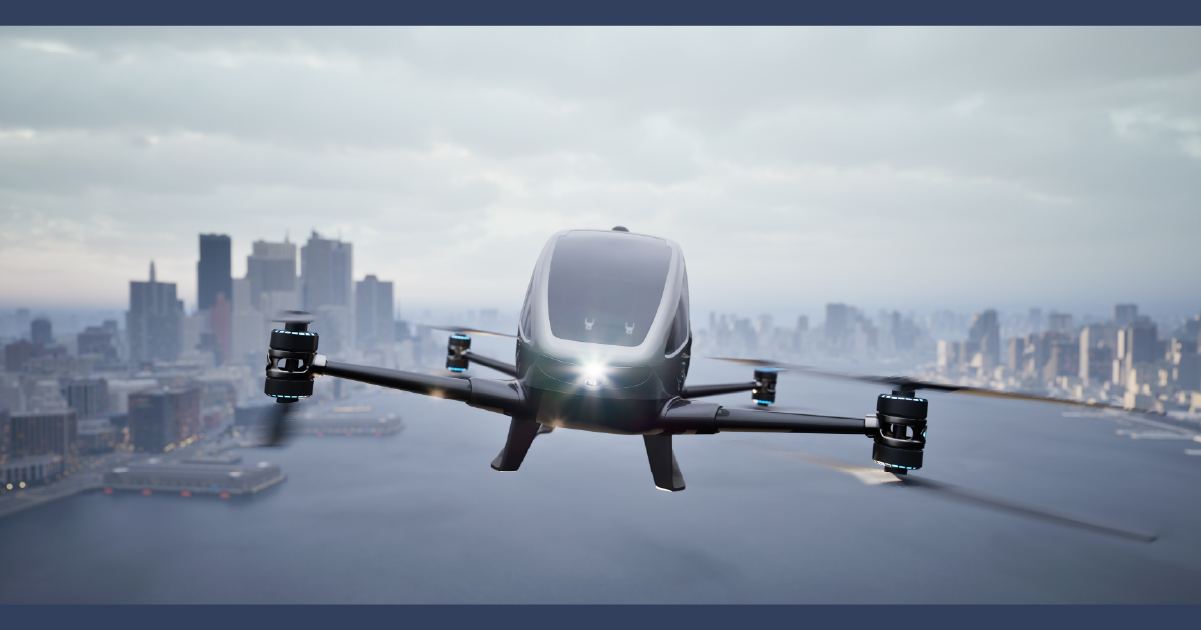
A flying taxi, often called an eVTOL (electric vertical takeoff and landing) aircraft, is a new type of vehicle designed and developed specifically for short-distance urban and regional travel. Think of it as a hybrid between a helicopter and a small airplane—but powered entirely by electricity. Unlike traditional aircraft, eVTOLs are designed to be much quieter and more environmentally friendly.
eVTOL Companies
Businesses like Joby Aviation, Wisk Aero, and Archer Aviation are at the forefront of this emerging industry. Their goal is to create a network of electric flying taxis that can be booked through an app, similar to how we use ridesharing services today.
eVTOL Features
Key features of these electric aircraft include:
Electric propulsion: They run on batteries, which means they produce zero operational emissions and are significantly quieter than conventional helicopters. This is a major advantage for operating in dense urban areas.
Vertical take-off and landing: Like a helicopter, an eVTOL is capable of vertical take-off and landing. This allows them to operate from small, designated sites—not runways—called Vertiports, which can be located on top of buildings or in parking garages.
Short-distance focus: These aircraft are designed for trips of up to 50–100 miles. They are ideal for connecting city centers with airports or linking neighboring cities, bypassing traffic on the ground. For example, Archer Aviation plans to launch development of future services connecting New York City’s airports with Manhattan, using existing infrastructure.
The vision is to create “highways in the sky for the new aircraft”—offering a new layer of transportation efficiency that could meet the demand to dramatically reduce commute times for the general public.
What Are Pilot Requirements for Flying Taxis?
In 2024, the Federal Aviation Administration (FAA) finalized a rule for “powered-lift” aircraft (including four-passenger air taxis), setting pilot qualifications, training, certification, and operation requirements to ensure these aircraft operate safely. This marks the first new civil aircraft category in history since helicopters in the 1940s. The rule establishes a framework for safely integrating Advanced Air Mobility (AAM) into national airspace, paving the way for commercial electric air taxis for passengers, cargo, and more.
How Safe Are Flying Taxis?
Safety is the single most important factor for the success of electric flying taxis. Manufacturers and regulators are working to ensure these aircraft meet safety standards that are as high as, or even higher than, those for commercial airliners.
The design of eVTOLs incorporates several safety features:
Multiple rotors: Most eVTOL designs feature multiple propellers or rotors. This redundancy means that if one or even two motors fail, the aircraft can still fly and land safely.
Simplified controls:The advanced flight control systems are designed to be simpler and more automated than those in traditional helicopters. This reduces the potential for human error by pilots.
Battery safety: Rigorous flight testing is underway. These tests will ensure the battery systems are safe, reliable, and protected from overheating or other malfunctions.
Who Will Pilot the Air Taxis of the Future?
A major question for eVTOL air taxis is who will be qualified to fly them. The FAA has created a “powered-lift” category with new training rules, but concerns remain about the pilot pool.
Early pilots will likely be highly trained professionals, but as demand grows, companies may recruit from general aviation—an area with a higher accident rate than commercial flights (according to National Transportation Safety Board aviation safety data). If air taxi pilots come from this less-regulated background, risks could increase. Strict standards are essential to ensure passenger safety and public confidence.
Learn about how the FAA is paving the way for the new era of travel that is electric flying taxis (eVTOLs).
¿Tengo motivos para presentar una demanda?
Número de teléfono
Fax
Dirección
134 North LaSalle St., Suite 1515, , Chicago, IL 60602 Cómo llegar
Acuerdos y sentencias
$7.5M
Se han conseguido 7,5 millones de dólares para un trabajador de la construcción que sufrió un accidente en la obra
$3M
Se han recuperado 3 millones de dólares para la familia de una persona atropellada por un camión de basura
$2.2M
Se han recuperado 2,2 millones de dólares para un comercial que resultó herido en un accidente de tráfico
$2M
Se han conseguido 2 millones de dólares para una persona que fue atropellada por un vehículo que circulaba a exceso de velocidad mientras esperaba el autobús de la CTA
$1.4M
Se han recuperado 1,4 millones de dólares para un programador informático que resultó herido tras sufrir un resbalón y una caída
$1M
Indemnización de 1 millón de dólares en solo 90 días para la familia de un hombre que falleció mientras ayudaba a un conductor que se había quedado tirado


 28 de febrero de 2026










 (312) 223-1700