Legal terms can often feel overwhelming, but understanding them is key to making informed decisions. One such term that often arises in financial or legal situations is “lien.” To make this concept clearer, our personal injury lawyers created this guide to explain what a lien is, how it works, and the different types you may encounter.
In this Article
What Is a Lien?
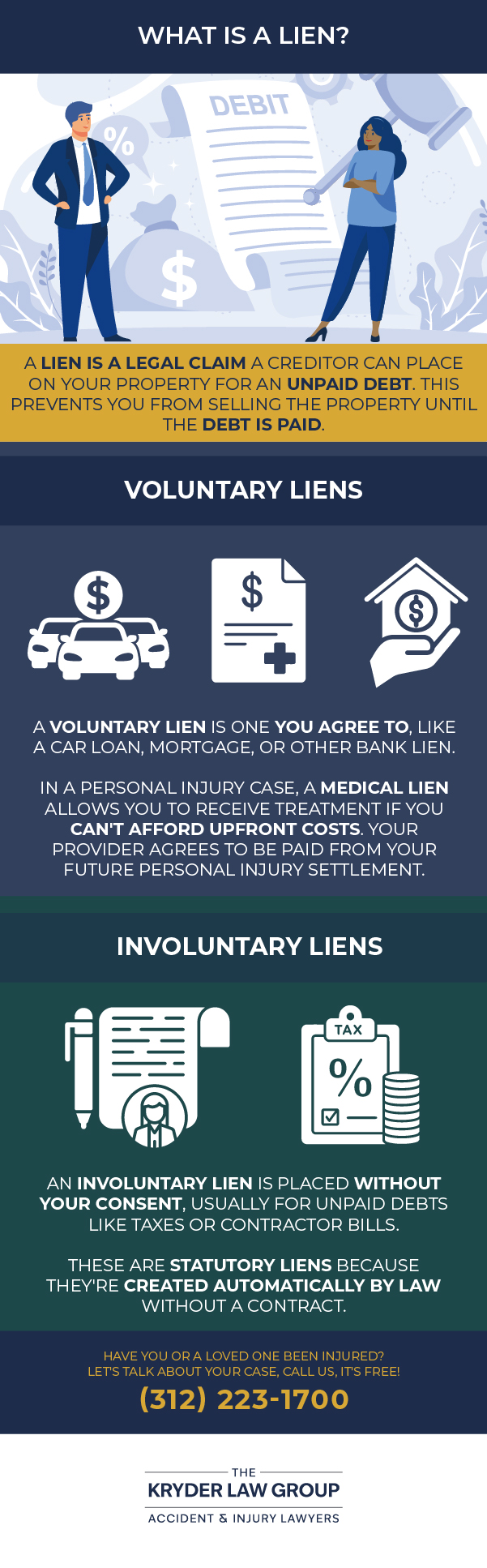
A lien is a legal claim against an asset, like property, to secure a debt. If you owe money, the creditor—or lien holder—can place a lien on your personal property, preventing you from selling it until the debt is paid. Liens are common for mortgages, unpaid taxes, or in personal injury cases. You can remove a lien by paying off your loan in full. Once you repay the debt, have your lender sign a lien release document.
Voluntary vs. Involuntary Liens
Liens can be either voluntary or involuntary. A voluntary lien is one you agree to, like a car loan, mortgage, or other bank lien.
An involuntary lien is placed without consent, often for unpaid debts like back taxes (IRS tax lien) or unpaid contractor work (mechanic’s lien). These are statutory liens that arise automatically under the law without the need for a contract.
Types of Liens
Liens can take many forms, depending on who is owed money and why.
Personal Injury (Medical) Lien
Personal injury cases often involve medical liens. If you’re injured and can’t afford upfront medical costs, a healthcare provider might agree to treat you on a “lien basis.” This means they’ll recover their payment from your future settlement.
Example: After a car accident, a $20,000 surgery is covered through a hospital lien on your settlement. When the case settles for $100,000, the hospital is paid first, and you receive the remaining amount.
Mortgage Lien
A mortgage lien is the most familiar type of voluntary lien. When you take out a mortgage loan to purchase a home, the lender places a real estate lien on the property. If you fail to make your payments, the lender has the right to foreclose on the home and sell it to recover their funds.
Example: If you buy a $300,000 home with a mortgage, the bank places a lien on the property. If payments stop, the bank can foreclose and sell the house to recover the loan.
Judicial Lien
A judgment lien arises when a court orders you to pay money after losing a lawsuit. If you don’t pay the awarded amount, the creditor can file a lien against your property to secure payment.
Example: A credit card company sues you for unpaid debt and wins a $5,000 judgment. They place a lien on your home. Until you pay off the debt, you cannot sell or refinance the property with a clear title.
Federal Tax Lien
Failing to pay federal income taxes can result in a tax lien for delinquent taxes from the IRS. This involuntary lien attaches to nearly all assets you own, like your house, car, or financial accounts. It ensures the government gets paid before you can sell or refinance your property.
Example: You owe $15,000 in overdue taxes, and the IRS files a federal tax lien. Now, if you sell your house, the government must receive the $15,000 before you see any proceeds.
Mechanic’s Lien
Despite its name, a mechanic’s lien isn’t just for car repairs—it’s often used in construction. If a contractor or supplier works on your property and doesn’t get paid, they can file a lien against it.
Example: You hire a contractor for a $10,000 kitchen remodel, but you withhold $2,000 due to a dispute. The contractor files a lien on your property, making it difficult to sell or refinance until the issue is resolved.
Why Understanding Liens Matters
Knowing how liens work can help you protect your assets and make informed decisions. Whether it’s negotiating a medical lien after a personal injury settlement or understanding the terms of your mortgage, being proactive about liens can save you time, money, and stress.
If you ever find yourself dealing with a lien, it’s important to understand your rights and options. You may be able to negotiate the amount, dispute the validity of the lien, or pay it off to remove it. In some cases, consulting a lawyer or financial advisor can help you navigate the process.
Confused about how a lien affects your personal injury settlement? We explain this legal term with simple definitions and examples.
Do I have a case?
Phone Number
Fax
Address
134 North LaSalle St., Suite 1515 Chicago, IL 60602 Get Directions
Settlements & Verdicts
$7.5M
$7.5 Million Recovered for a Construction Worker Injured on Site
$3M
$3 Million Recovered for the Family of a Person Struck by a Garbage Truck
$2.2M
$2.2 Million Recovered for a Salesperson Injured in an Automobile Collision
$2M
$2 Million Recovered for a Person Struck by a Speeding Vehicle While Waiting for the CTA Bus
$1.4M
$1.4 Million Recovered for a Computer Programmer Injured in a Slip and Fall
$1M
$1 Million Recovery in just 90 Days for the Family of a Man Killed While Helping a Stranded Motorist


 March 15th, 2026









 (312) 223-1700