

If you’re injured at work in Illinois, you may qualify for workers’ compensation benefits. This no-fault insurance covers medical bills, lost wages, and more. An Arlington Heights workers’ compensation lawyer from our personal injury law firm can guide injury victims through the claims process to ensure they receive fair compensation and maximum benefits.
In this Article
Do I Need an Arlington Heights, IL, Workers’ Comp Attorney?
Yes! A personal injury attorney helps injured employees deal with insurance companies to secure the best possible compensation. After work injuries, we ensure your medical bills are covered and your payments continue without interruption. If disputes arise, we work to resolve them quickly and efficiently.
What Is a Third-Party Lawsuit in a Workers’ Compensation Case?
In some cases, you may be able to sue a third party whose negligence contributed to your workplace injury. These third-party lawsuits (like other types of personal injury cases that must be filed within two years of your accident) can allow you to pursue damages beyond physical pain that aren’t covered by workers’ compensation—such as pain and suffering.
For example, if you were injured in a car accident or other auto accident while on the job, you might have a valid personal injury claim.
What Is Illinois Workers’ Compensation Coverage?
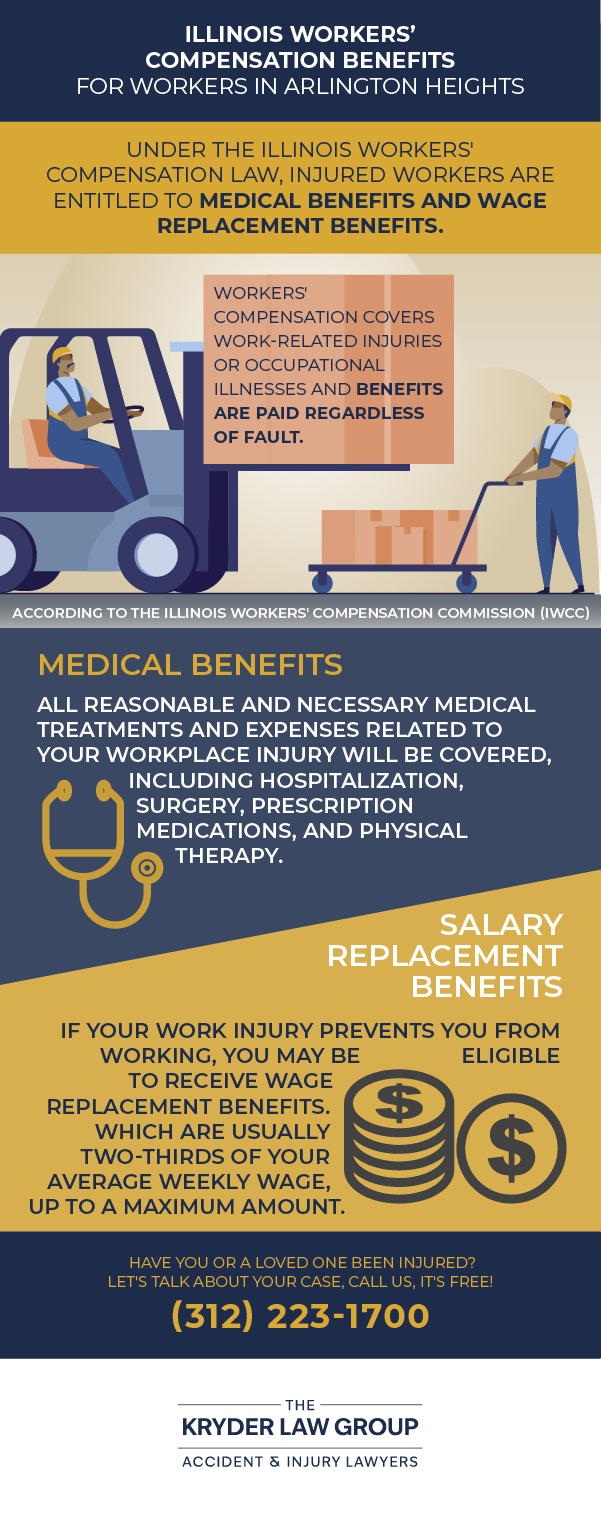
The Illinois workers’ compensation system, managed by the Illinois Workers’ Compensation Commission (IWCC), requires most employers to carry workers’ comp insurance. Under the Illinois Workers’ Compensation Act (820 ILCS 305, et al.), this insurance provides vocational rehabilitation and financial benefits (for medical expenses and more) to employees injured or made ill on the job, regardless of who was at fault.
Illinois workers’ compensation law benefits include:
- Temporary Total Disability (TTD): wage replacement and medical care for workers temporarily unable to work
- Temporary Partial Disability (TPD): temporary disability benefits for injured workers returning to their employment with reduced earnings
- Permanent Partial Disability (PPD): benefits to workers with permanent impairments
- Permanent Disability Benefits (PTD): lifetime financial support for permanent disability
- Death benefits: financial support and funeral expense coverage for dependents of workers who died from workplace injuries or work-related illnesses
Why Can Workers’ Compensation Cases Be Denied?
Per Illinois law, a workers’ compensation claim might be denied if the injury or illness wasn’t reported on time, lacks sufficient evidence, involves a preexisting condition, isn’t a work-related injury, or is an injury that occurred outside of work.
Common Types of Workplace Accidents in Arlington Heights
Workplace injuries and accidents that may constitute a valid claim include:
- Burns or chemical exposures
- Repetitive motion injuries
- Heavy machinery injuries on construction sites
- Overexertion injuries
Most Common Workplace Injuries
Some of the more common injuries workers may experience include sprains and strains, as well as repetitive strain injuries like carpal tunnel syndrome. More serious conditions can also occur, such as back injuries, neck injuries, spinal cord injuries, head trauma, broken bones, and brain injuries.
What to Do After a Workplace Accident in Arlington Heights, Illinois
If you or a family member was injured at work in Cook County or across Illinois, follow these steps:
- Report the accident to your employer immediately. They’ll notify their insurance company.
- Seek medical treatment and follow your doctor’s advice.
- Track medical costs and missed work.
- Consult a personal injury and workers’ comp lawyer to help with your workers’ comp claim and the legal process, aggressively pursue benefits, and get maximum compensation.
Contact an Arlington Heights Workers’ Comp Attorney for Legal Representation
With a strong track record of protecting clients’ rights, the workers’ compensation attorneys on our team have the legal experience to represent injured workers in Arlington Heights and throughout the state; we can work for the compensation you deserve while you concentrate on your recovery. Call us for a free consultation today. We will determine if you have a valid case, explain your options, and answer your questions. You don’t pay unless we win your case.









 (312) 223-1700