

If your student has been seriously injured or tragically killed in a hazing or bullying incident, a Chicago hazing and bullying lawyer can help. Our personal injury attorneys have decades of experience with complex claims, including those involving bullying or hazing. Call us for a free consultation.
In this Article
What Is Hazing or Bullying?
Hazing and bullying are types of harassment found in many settings, including college campuses. Both can cause significant physical and psychological harm to victims.
- Hazing usually involves initiation rituals forced on new members, like in a sports team, fraternity, or sorority, aiming to humiliate or harm.
- Bullying consists of repeated aggressive conduct intended to harm, intimidate, or control someone.
Facing the Challenge: Combating Hazing and Bullying on College Campuses
As the new school year approaches, parents and their college-bound kids are preparing for college life. Parents often go through checklists with their teens, reminding them about laundry, medication, and the dangers of alcohol and drugs. While cautioning them, many also encourage joining a fraternity or sorority. Greek life offers benefits like networking, philanthropy, community service, social development, and leadership skills.
Be Aware of Hazing
A concern often overlooked is sorority or fraternity hazing and bullying, with potentially catastrophic outcomes. As college students return to school, it’s crucial to recognize the dangers of hazing and bullying, which can lead to serious physical and emotional injuries.
How Common Is Hazing in Illinois?
According to the Hazing Prevention Network, 55% of college students in various organizations experience hazing, with the majority going unreported. In Illinois, many report hazing with severity ranging from mild discomfort to life-threatening injuries or death.
Common Types of Hazing
Not all hazing looks the same. There are different types of hazing behaviors that pledges can be exposed to, ranging from silent games to physical abuse, sexual harassment, and sexual assault.
Hazing victims may be subjected to a wide range of harmful activities, including forced alcohol consumption, coerced eating, and sleep deprivation. They can endure psychological torment such as verbal abuse, humiliation, and harassment, as well as physical abuse ranging from burns to bondage. Other degrading acts may include forced personal servitude, nudity, sexual abuse, and animal cruelty. Victims might also be forced to engage in illegal activities like abductions or kidnapping or be exposed to dangerous weather conditions.
What Illinois Laws Address Hazing?
When discussing hazing with your child, start by defining terms. Under Illinois’s hazing statute (720 ILCS 5/12C-50), hazing is defined as knowingly requiring a person to participate in an activity or perform an act for admission into a group at an educational institution, where the act is not sanctioned by the institution and results in bodily harm.
Is Hazing Illegal in Illinois?
Yes. Hazing is illegal in Illinois and is classified as a Class A misdemeanor escalating to a Class 4 felony if resulting in death or serious injury. Most college handbooks explicitly prohibit all hazing activities.
What Are Examples of Hazing in Illinois?
Here are some cases involving hazing that occurred in Illinois:
- Bogenberger v. Pi Kappa Alpha Alpha Corp
In 2012, 19-year-old David Bogenberger died from alcohol poisoning (his blood alcohol level reached five times the legal limit) at a Pi Kappa Alpha hazing event. His family’s civil lawsuit led to the landmark Illinois Supreme Court case, Bogenberger v. Pi Kappa Alpha Corp., Inc. The court ruled that social host protections don’t apply to hazing, establishing that fraternity chapters and members can be sued for negligence in such cases. In 2018, a $14 million settlement was reached, setting a new precedent for liability that challenged previous rules, such as those found in the Dram Shop Act, for providing alcohol during hazing. - Nick Haben died on October 19, 1990, from alcohol poisoning related to a lacrosse club initiation at Western Illinois University.
- On March 28, 1970, Donna Bedinger suffered fatal head trauma during a sorority pledge event at Eastern Illinois University.
What Federal Laws Address Hazing?
By federal law, under the Jeanne Clery Campus Safety Act, colleges and universities receiving federal student aid are required to take new measures against hazing. They must now include hazing incidents in their annual crime reports, publicly disclose any student organizations disciplined for hazing, and implement comprehensive, research-based hazing prevention programs for the campus community.
What Should I Do If My Child Is Injured in a Hazing Incident?
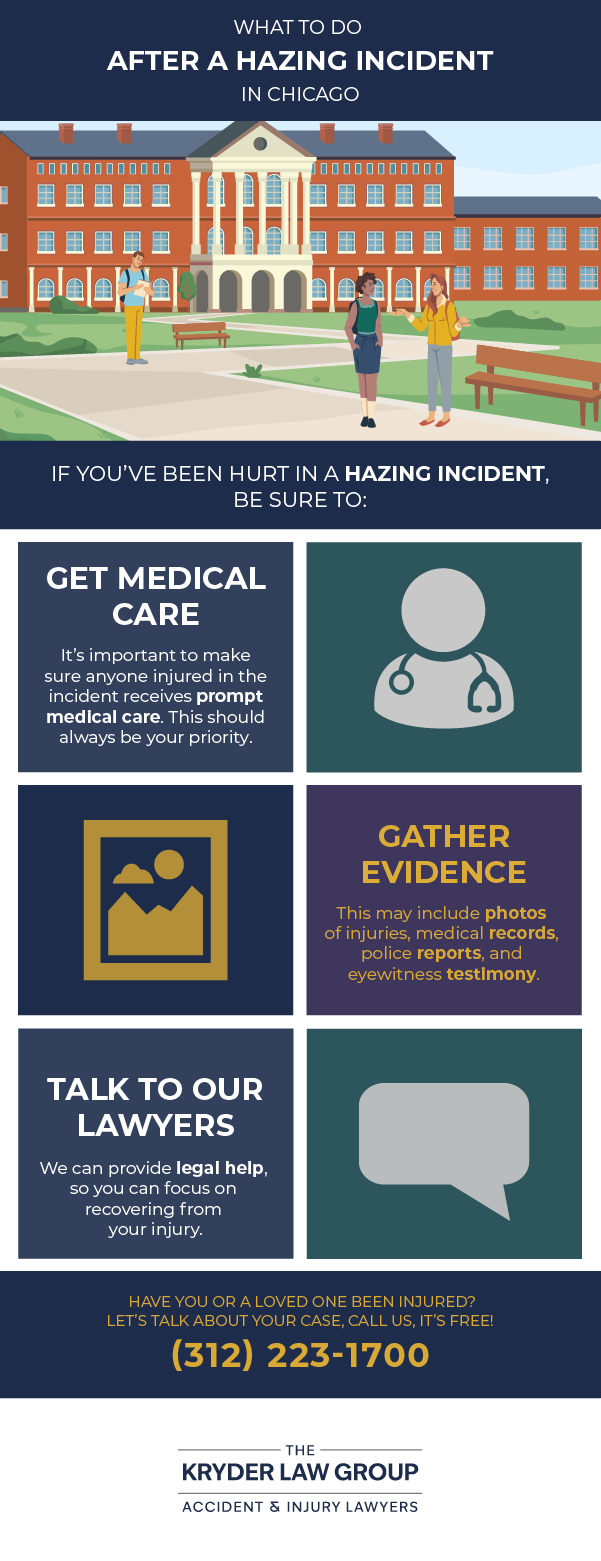
If your child has suffered a serious injury as the result of hazing:
- Seek medical treatment first. Then focus on legal matters.
- Gather evidence to prove your case. This may include photos of injuries, medical records, police reports, and eyewitness testimony.
- Contact an experienced personal injury lawyer. We can help you seek justice, navigate the legal process, and negotiate for maximum compensation with insurance companies. If a fair settlement isn’t reached, we can argue the case on your behalf at trial.
What Resources Are Available?
Parents are advised to review their student’s school policy on hazing. Most colleges have clear policies against it.
- “How to Stop Hazing”—a comprehensive guide from our legal team
- Hazingprevention.org—a resource guide to prevent hazing, including information on state laws regarding hazing
- University of Chicago Hazing Policy
- University of Illinois Rules of Conduct
- Southern Illinois University Hazing Report
- Northern Illinois University Student Code of Conduct
- Western Illinois University Policy on Hazing
- Northwestern University Hazing Prevention Policy
Pledges: Tips to Stay Safe While Considering Greek Life
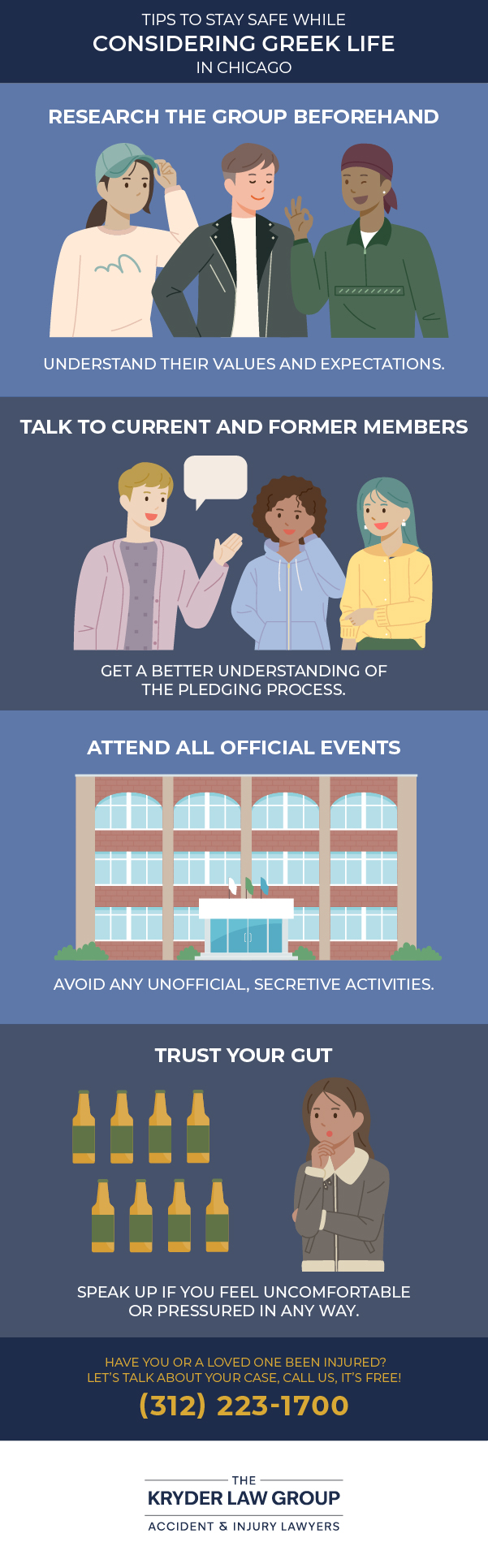
- Research the group beforehand to understand their values and expectations.
- Talk to current and former members to get a better understanding of the pledging process.
- Attend all official events and avoid any unofficial, secretive activities.
- Trust your gut and speak up if you feel uncomfortable or pressured in any way.
Contact The Kryder Law Group, LLC Accident & Injury Lawyers
If you or your child has been the victim of hazing or bullying as an employee in the workplace or in an educational setting, the experienced attorneys at our law firm can help. Call us for a free case review to get started.










 (312) 223-1700