

If you’ve been injured at work in Illinois, you may qualify for workers’ compensation benefits. This no-fault insurance covers medical expenses, lost wages, and more. An Evanston workers’ compensation lawyer from our personal injury law firm can help. We represent clients across Illinois and can recover maximum compensation for you.
In this Article
Do I Need an Evanston Workers’ Comp Attorney?
Yes! Our personal injury attorneys have thorough knowledge of workers’ compensation law. We help injured employees deal with insurance companies to secure fair compensation. If you’re suffering from serious injuries from work, we ensure your medical bills are covered and your payments continue as scheduled. If disputes arise, our experienced team works to resolve them quickly and efficiently.
What Is a Third-Party Lawsuit in a Workers’ Compensation Case?
In some cases, you may be able to sue if a third party’s negligence contributed to your workplace injury. These third-party claims allow you to seek additional compensation that isn’t covered by workers’ compensation—such as pain and suffering.
For example, if someone was injured in a car accident, truck accident, or other motor vehicle collision while on the job and it was caused by a negligent driver, the injured victim might have a valid personal injury case.
What Are Illinois Workers’ Compensation Benefits?
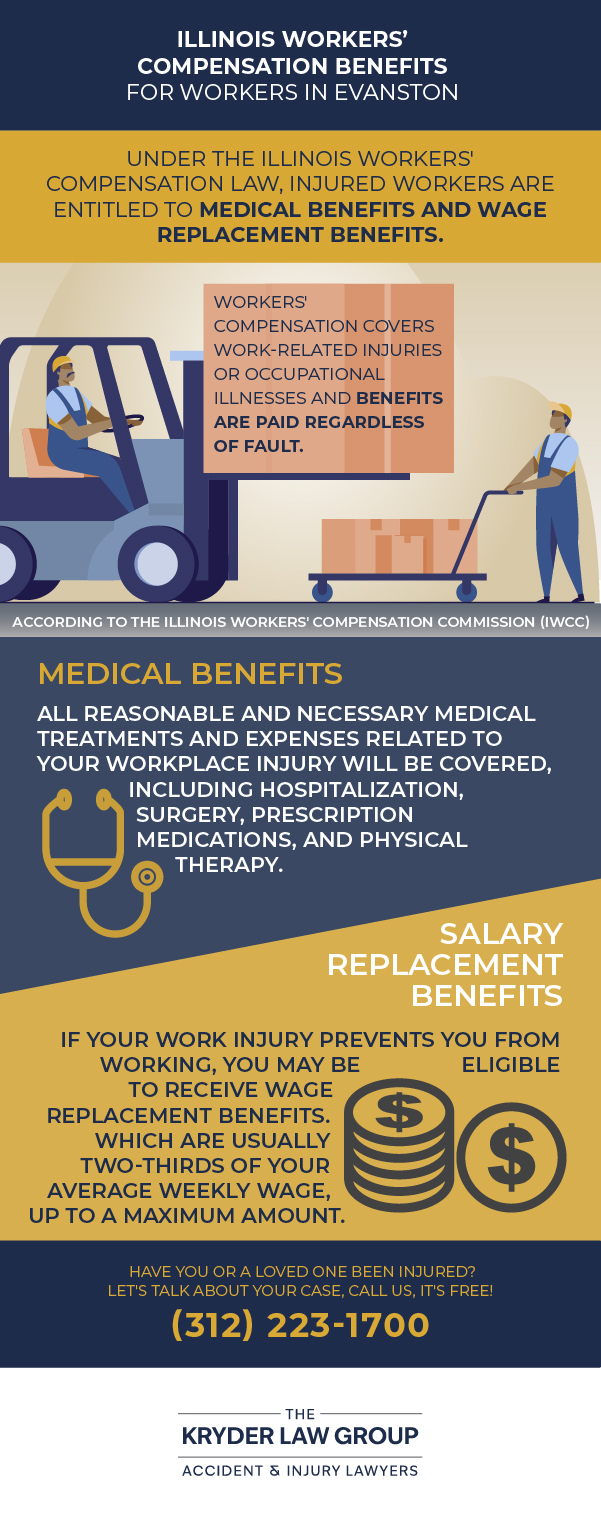
The Illinois workers’ compensation system, managed by the Illinois Workers’ Compensation Commission (IWCC), requires most employers to carry workers’ comp insurance. Under the Illinois Workers’ Compensation Act (820 ILCS 305, et al.), this insurance provides a safety net of medical and financial benefits to employees injured or made ill on the job, regardless of fault.
Illinois workers’ compensation benefits include:
- Temporary Total Disability (TTD): wage replacement and medical care for workers temporarily unable to work
- Temporary Partial Disability (TPD): benefits for injured workers returning to their employment with reduced earnings
- Permanent Partial Disability (PPD): benefits to workers with a permanent disability
- Permanent Total Disability (PTD): lifetime financial assistance for workers who are permanently disabled
- Death benefits: financial support and funeral expense coverage for the deceased worker’s family
Why Can Workers’ Compensation Cases Be Denied?
According to Illinois law, a workers’ compensation claim can be denied if the injury or illness isn’t reported quickly, lacks evidence, involves a preexisting condition, isn’t a work-related injury, or occurs outside the workplace.
Most Common Workplace Injuries
Common workplace accidents that require medical treatment include burns, chemical exposures, heavy machinery injuries, fall accidents, and overexertion injuries.
Other of the more common injuries workers experience include sprains and strains. These include repetitive strain injuries (or repetitive stress injuries). More serious conditions can include back injuries, shoulder injuries, neck injuries (requiring neck surgery), spinal cord injuries, broken bones, and traumatic brain injuries.
What to Do After a Workplace Accident in Evanston, IL
Injury victims should follow these steps:
- Report the accident to your employer immediately. They’ll notify their workers’ compensation insurance provider.
- Seek medical attention immediately.
- Follow through with all treatments ordered by your doctor.
- Track medical costs and missed work.
- Consult a personal injury lawyer to help with your claim.
Contact an Experienced Attorney in Evanston, Illinois
If you suffered injuries in a work-related accident, seek compensation with the help of an Evanston workers’ compensation lawyer. Each of our Evanston personal injury lawyers has the experience to assess your workers’ comp claim and explain your legal options.
Our Personal Injury Law Firm Offers Free Case Evaluations
Call our law office today for a free consultation. Our IL workers’ compensation attorneys have provided legal representation to clients from Evanston and Chicago, IL, and across the Midwest. We work on a contingency fee basis, so you don’t pay legal fees unless we win your case.










 (312) 223-1700