

It is tragic and distressing when you entrust a family member to a facility, expecting quality care, only to find they’ve suffered nursing home abuse and neglect. A Grand Rapids nursing home abuse lawyer in our personal injury law firm is here to provide legal representation to manage a nursing home abuse claim for you.
In this Article
How a Grand Rapids Nursing Home Negligence Lawyer Can Help
Our lawyers handle personal injury cases for nursing home abuse victims with cases involving bed sores, malnutrition, falls, medication errors, wrongful death, and more. If you suspect abuse, call us to discuss legal action and seek justice.
We can investigate nursing home abuse cases, gather evidence to establish liability (reviewing medical records, gathering witness statements, and reviewing surveillance footage), manage the legal complexities of your claim, and ensure liable parties bear responsibility.
We can also help transfer your loved one to a safer facility to prevent further abuse while seeking compensation, taking the facility to court if necessary. In the most extreme nursing home neglect cases, we can file a wrongful death claim.
What Are the Warning Signs of Nursing Home Abuse?
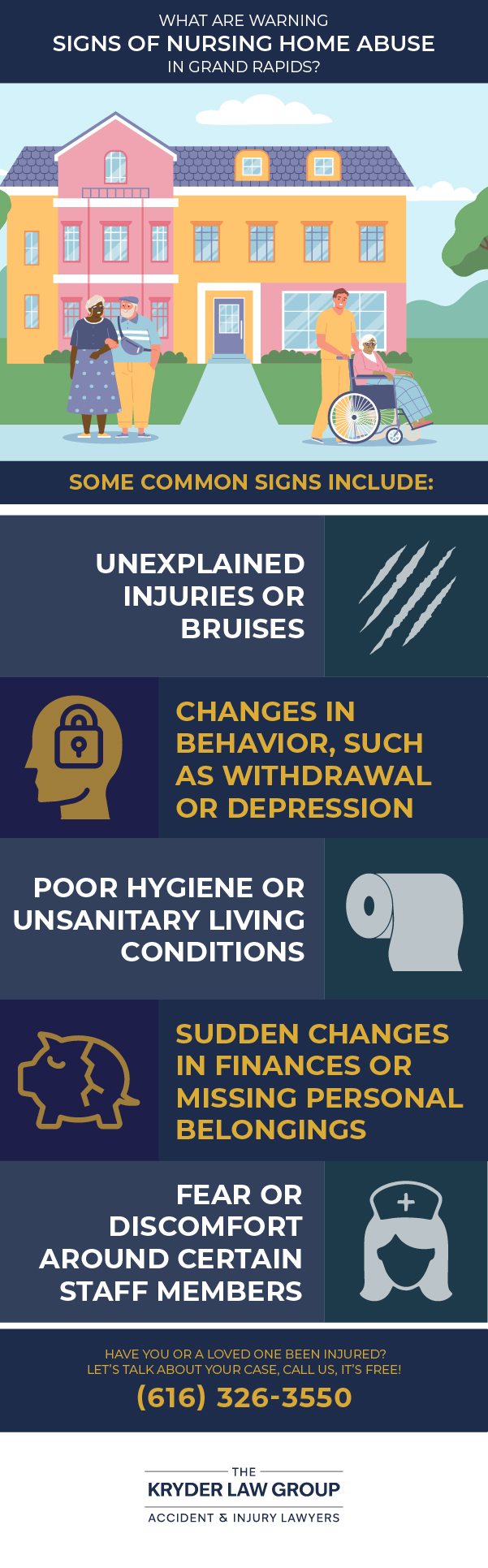
Common signs of nursing home injuries include untreated medical issues like pressure ulcers, unexplained injuries such as bruises or broken bones, and sudden changes in behavior like withdrawal or depression. Other red flags are sudden weight loss, poor hygiene, unsanitary living conditions, dirty clothes, a decline in a resident’s health and well-being, sudden financial changes, and a resident’s fear around specific staff members.
How Do State and Federal Laws Protect Nursing Home Residents?
Michigan protects nursing home residents with Michigan Public Health Code MCL Section 333.20201, commonly known as the Consumer Bill of Rights for long-term care residents. Enforced primarily by the Michigan Department of Licensing and Regulatory Affairs (LARA), state laws build upon federal standards to mandate a safe environment and absolute protection from abuse, enforce chemical and physical restraint limitations, and ensure comprehensive clinical care.
The Federal Nursing Home Reform Act of 1987 (NHRA), enacted under the Omnibus Budget Reconciliation Act of 1987 (OBRA ’87), mandates that Medicare- and Medicaid-certified facilities must promote and protect the dignity and rights of each resident.
The Extent of Nursing Home Negligence and Abuse
Elder abuse is alarmingly high in nursing homes, with the World Health Organization (WHO) reporting two out of three staff members admitting to some form of abuse in the past year.
Types of Nursing Home Misconduct and Abuse
Nursing home abuse by nursing home staff or other residents can take many forms. Some common examples include:
- Physical abuse—including hitting or slapping
- Emotional abuse—through words or actions
- Sexual abuse—unwanted sexual contact or activity
- Financial abuse—illegal financial exploitation of a resident’s finances
- Elder neglect—when staff members fail to provide a patient with adequate nutrition, hydration, personal care, other necessary care, and proper supervision
- Medical malpractice—medication errors or failure to treat infections
Steps to Take If You Suspect Abuse or Neglect
If you suspect neglect or abuse, act quickly:
- Seek medical treatment from their own doctor.
- Document any signs of abuse or neglect, including photographs if possible.
- Speak with your loved one privately about their experiences and document their statements.
- Contact the facility’s management and report your concerns.
- Report nursing home abuse to Michigan authorities (below).
- Consult our Grand Rapids nursing home lawyers for legal assistance.
How Do I File a Complaint About Nursing Homes in Michigan?
File a complaint with LARA using the centralized Michigan LARA complaint portal.
What Damages Might an Abused Nursing Home Resident Recover?
If you or an elderly loved one has suffered emotional or physical harm in a nursing home, you may be entitled to fair compensation through an abuse or neglect claim. This may include non-economic and economic damages for current and future medical expenses, physical pain and suffering, and emotional distress. If relocation to a new facility is necessary, those costs may also be recoverable.
How Long Do I Have to File a Nursing Home Abuse Lawsuit in Michigan?
You generally have two years from the date of the incident to file a nursing home abuse or neglect lawsuit. In addition, Michigan law (MCL 600.2912b) requires you to provide a Notice of Intent (NOI) to the nursing home at least 182 days before you can formally file the lawsuit.
It is important to consult with an experienced personal injury attorney about your particular case.
How Can I Prevent Nursing Home Abuse?
To prevent nursing home neglect or abuse, be proactive:
- Thoroughly research and choose a reputable facility.
- Make regular visits to ensure proper care and supervision.
- Communicate regularly with nursing home personnel and address concerns immediately.
- Know the signs of abuse and monitor for any changes in the resident’s appearance or behavior.
Speak with a Grand Rapids Nursing Home Abuse Attorney
Our Grand Rapids nursing home abuse lawyers help families build a strong elder abuse case for their loved ones to ensure negligent parties are held accountable. Call us. We offer a free consultation with an experienced attorney who will explain your legal options.










 (312) 223-1700