

It is tragic and distressing when you entrust a family member to a nursing home only to find they’ve suffered mental and physical abuse. A St. Louis nursing home abuse lawyer in our personal injury law firm is here to provide legal representation to manage a nursing home abuse claim for you. Call for a free confidential consultation.
In this Article
How a St. Louis Nursing Home Negligence Lawyer Can Help
Our lawyers handle personal injury cases for nursing home abuse victims with physical injuries, bed sores, malnutrition, falls, wrongful death, and more. If you suspect abuse, call us to discuss legal action and seek justice.
We manage nursing home abuse cases. We gather and analyze evidence to determine liability (consulting medical experts and gathering medical records, witness statements, and surveillance footage), manage your legal claim, and ensure responsible parties bear liability for injuries sustained.
We can also help transfer your loved one to a safer nursing facility to prevent further harm while seeking fair compensation, taking the facility to court if necessary. We can file a wrongful death claim following a resident’s death.
What Are the Warning Signs of Nursing Home Abuse?
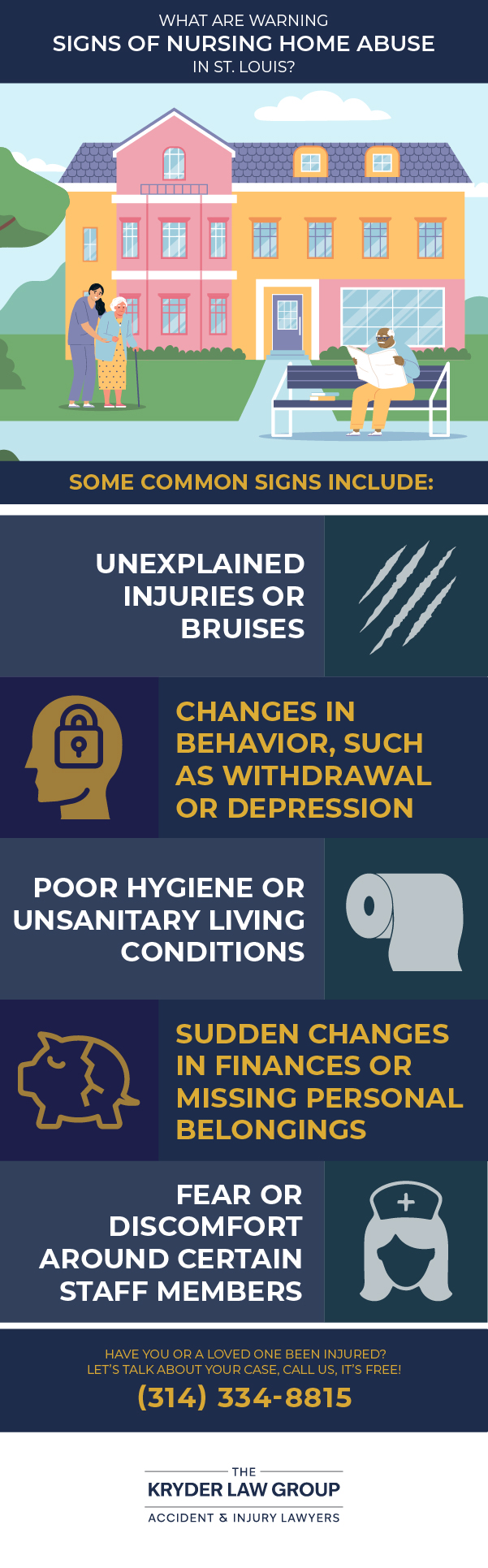
Common signs of nursing home abuse include untreated medical issues like pressure ulcers, unexplained injuries such as bruises or broken bones, and sudden changes in behavior like withdrawal or depression.
Other red flags are sudden weight loss, poor personal hygiene, unsanitary living conditions, sudden financial changes, and a resident’s fear around specific nursing home staff members.
How Do State and Federal Laws Protect Residents of Nursing Homes?
In Missouri, nursing home residents are protected by a combination of state statutes, state regulations, and federal laws. The primary legal framework for these protections is the Missouri Omnibus Nursing Home Act (Sections 198.003 to 198.186), which outlines clear rights and expectations for care.
Missouri’s long-term care residents have the right to live safely, be treated with dignity, and remain free from abuse, improper physical restraints, and unnecessary sedatives. They are also entitled to a clean, safe environment, privacy, open communication, choice in medical care, and equal access to treatment.
The Federal Nursing Home Reform Act of 1987 (NHRA), enacted under the Omnibus Budget Reconciliation Act of 1987 (OBRA ’87), mandates that Medicare- and Medicaid-certified facilities must promote and protect the dignity and rights of each resident in the nursing home industry.
The Extent of Nursing Home Negligence and Abuse
Elder abuse is alarmingly high in nursing homes, with the World Health Organization (WHO) reporting two out of three staff members admitting to some form of abuse in the past year.
Types of Nursing Home Misconduct and Abuse
Physical and emotional injuries by nursing home staff or other residents can take many forms:
- Physical abuse—hitting or slapping
- Psychological abuse—emotional distress from words or actions
- Sexual abuse—non-consensual sexual contact or sexual assault
- Financial abuse—illegal financial exploitation of a resident’s finances or personal property
- Elder neglect—staff members failing to provide a patient with adequate care (poor hygiene, nutrition, or hydration) leading to serious harm
- Medical malpractice—prescribed medication errors or failure to treat infections
Steps to Take If You Suspect Nursing Home Abuse or Neglect
If you suspect neglect or abuse, act quickly:
- Call 911 if your loved one is in immediate danger.
- Seek medical treatment from their own doctor.
- Document any signs of abuse or neglect, including photographs if possible.
- Speak with your loved one privately about their experiences and document their statements.
- Contact the nursing home administrator and report your concerns.
- Report Missouri nursing home abuse to authorities (below).
- Consult our St. Louis nursing home abuse and neglect attorneys to discuss financial recovery.
How Do I File a Complaint About Nursing Homes in Missouri?
To file a complaint about a nursing home in Missouri:
- Contact the Missouri Department of Health and Senior Services (DHSS). Call the Central Registry Adult Abuse and Neglect hotline at 1-800-392-0210.
- Contact the Missouri Long-Term Care Ombudsman Program for help resolving issues with facility management without starting a formal state investigation. Call 1-800-309-3282.
What Financial Compensation Might an Abused Nursing Home Resident Recover?
If you or an elderly loved one has suffered physical harm or emotional trauma in a nursing home, you may pursue compensation through an abuse or neglect claim. This may include medical expenses, physical pain and suffering, and wrongful death damages. If relocation to a new facility is necessary, those costs may also be recoverable.
How Long Do I Have to File a Nursing Home Abuse Lawsuit in Missouri?
By Missouri law, the time you have to file a nursing home abuse lawsuit depends entirely on the nature of the injury and the legal claim you are filing. It can range from two to five years following your loved one’s abuse under the Revised Statutes of Missouri (RSMo).
It is critical to seek legal advice from an experienced personal injury attorney about your particular case to avoid missing the window to recover compensation.
How Can I Prevent Nursing Home Abuse?
To prevent nursing home neglect or abuse, be proactive:
- Thoroughly research and choose a reputable facility.
- Make regular visits to ensure proper care and supervision.
- Communicate regularly with nursing home personnel and address concerns immediately.
- Know the signs of abuse and watch for any changes in the vulnerable resident’s appearance or behavior.
Speak with a St. Louis Nursing Home Abuse Attorney
If your loved one has suffered abuse, call us for legal assistance. Our St. Louis nursing home abuse and neglect lawyers help families build a strong elder abuse case for their loved ones to hold the nursing home accountable, seek compensation, and pursue justice.
Our experienced legal team offers a free consultation with an experienced attorney who will explain your legal options. Our law firm works on a contingency fee basis, so you have no upfront legal fees.










 (312) 223-1700