

If you or a loved one has become seriously ill and you suspect food poisoning, an experienced Chicago food poisoning lawyer is here to provide legal representation for food poisoning victims. Severe cases of food poisoning can require hospitalization, and the consumption of contaminated food can sometimes result in death. Our team of personal injury lawyers will pursue food poisoning lawsuits to seek full and fair compensation on your behalf. Call today for a free case evaluation.
In this Article
E. coli Outbreaks in the News
According to the Centers for Disease Control and Prevention (CDC), food poisoning affects approximately 48 million Americans every year and is caused by over 250 different pathogens.
Recent E. coli outbreaks highlight ongoing food safety concerns. In March 2026, raw cheddar cheese from Raw Farm was linked to an outbreak of E. coli O157:H7, sickening at least nine people across three states and prompting a product recall. Similarly, in October 2024, McDonald’s faced a multistate outbreak that affected 49 individuals, resulting in 10 hospitalizations and one death. These incidents underscore the importance of vigilance in food production and handling to prevent such public health risks.
If you’ve suffered a serious illness after dining in food establishments, call today to discuss your case with our Chicago food poisoning attorneys. You may be eligible for compensation, including lost wages, medical bills, and more.
Do I Have a Food Poisoning Case?
If you or a loved one has suffered food poisoning that required medical treatment, you may have a valid food poisoning claim for financial compensation. Our experienced food poisoning lawyers will thoroughly investigate the circumstances surrounding your illness to determine liability and seek justice on your behalf.
Here are some factors that may contribute to a successful food poisoning lawsuit:
- Identifying the source of the unsafe food is the first step in building food poisoning cases.
- If you have proof that the defendant was negligent or malicious in handling, preparing, or storing the food in question, this can help build your case.
- Proof of contamination through laboratory testing of the food source from expert witnesses, including experts in medicine, microbiology, and food safety, can also build your case.
- Seek medical attention to create essential medical records detailing the severity and impact of your illness.
What Are Common Food Poisoning Cases?
Food poisoning, or foodborne illness, is caused by consuming contaminated food or drinks. It can occur at any stage of food production, from growing to preparing. Common causes of foodborne illnesses include:
Foodborne Illnesses Caused by Bacteria
Many foodborne illnesses are common culprits of food poisoning outbreaks:
- Salmonella is the most common type of food poisoning, usually caused by consuming contaminated meat, poultry, eggs, or unpasteurized dairy products.
- E. coli is found in raw or undercooked poultry, raw or undercooked meat, or contaminated produce (including raw fruits and leafy greens).
- Listeria is commonly found in deli meats, soft cheeses, and unpasteurized milk products.
Viruses Causing Foodborne Illness Cases
Several viruses can cause food poisoning:
- Norovirus is highly contagious and often spreads through improperly handled food or water.
- Hepatitis A is caused by consuming food or drinks contaminated with fecal matter from an infected person.
Food Contamination from Parasites
These types of parasites can cause serious illnesses:
- Toxoplasmosis can be contracted by eating undercooked meat or handling cat litter.
- Trichinosis is caused by eating raw or undercooked pork or wild game.
Toxins in Contaminated Foods
Some types of bacteria produce toxins that can cause food poisoning:
- Clostridium botulinum produces a potent toxin found in improperly canned or preserved food.
- Staphylococcus aureus can produce toxins in foods like meats, salads, and dairy products if left at room temperature for too long.
What Causes Foodborne Illness?
Food poisoning can result from exposure to harmful bacteria, viruses, and parasites due to poor food handling, inadequate storage temperatures, and contamination during processing or packaging. Common causes can include:
- Cross-contamination: transferring bacteria between foods through improper handling
- Unsanitary conditions: poor hygiene in restaurants or stores, spreading harmful bacteria
- Improper cooking: not cooking to recommended temperatures, allowing bacteria to survive
- Food recalls: contaminated products reaching shelves due to inadequate oversight and recall measures
Severe Symptoms of Food Poisoning
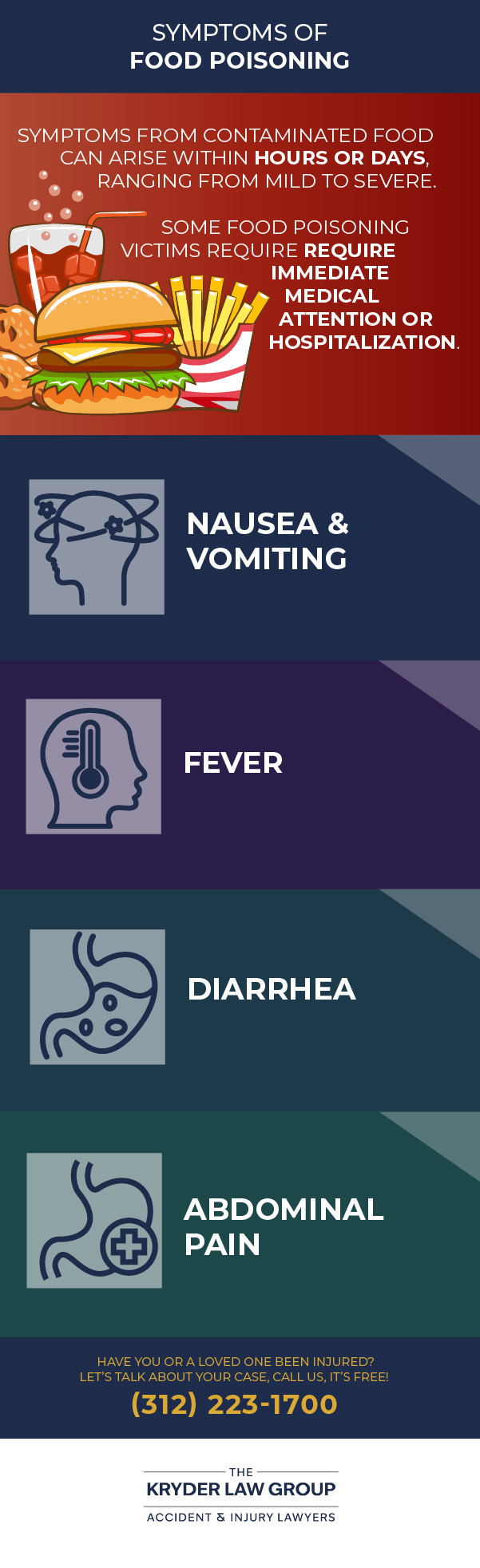
A food poisoning injury victim can experience nausea, vomiting, diarrhea, abdominal pain, stomach pain, and fever. Food poisoning symptoms usually appear hours after eating contaminated food, varying in severity from mild discomfort to serious conditions that may require immediate medical attention or hospitalization. Certain populations—infants, pregnant women, and the elderly—are more vulnerable to severe symptoms.
How Much Time Do I Have to File a Lawsuit in Illinois?
By Illinois law, there are strict deadlines for filing personal injury claims under its statute of limitations (735 ILCS 5/13-202). Filing your claim too late will likely result in your case being dismissed. In most cases, you have two years from the date of your illness to file a lawsuit.
Discuss Your Case with a Food Poisoning Lawyer
The best way to prove that contaminated food (due to improper food handling) caused your illness is to seek immediate medical attention. Then, contact us to discuss a personal injury claim.
Free Initial Consultation
In a free consultation, a personal injury lawyer from our law firm will review your case, explain the legal process to recover compensation (medical expenses, lost wages, and more) via a legal claim, and answer your questions. We work on a contingency basis where you pay nothing if you do not win your case.









 (312) 223-1700