When an accident is caused by an intoxicated person, many assume that the individual is the only party at fault. The dram shop law in Wisconsin extends liability to include the vendor that provided the alcohol; the vendor might share responsibility if the drunk person was a minor.
The drunk driving accident attorneys in our personal injury law firm explain Wisconsin’s dram shop statutes (which are designed to prevent drunk driving accidents by minors), detail what is required to build a civil liability case to recover damages, describe what evidence you will need, and clarify common misunderstandings about these types of claims.
In this Article
What Does “Dram Shop” Mean?
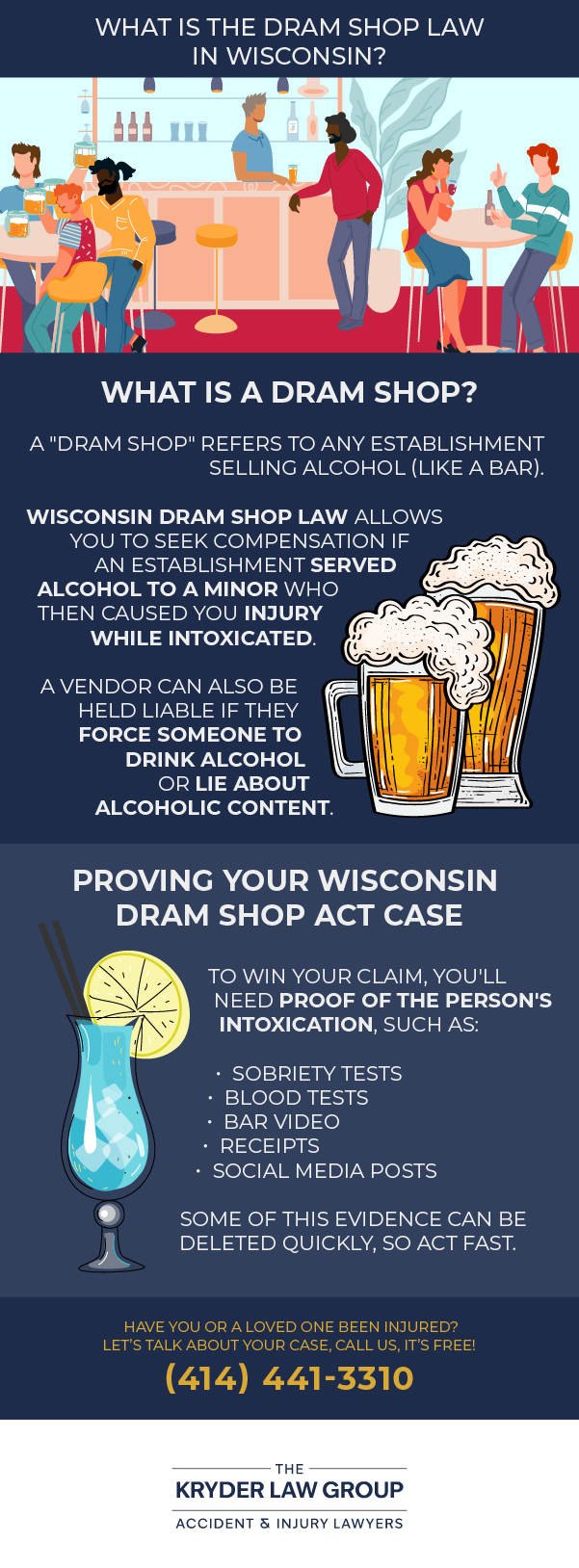
“Dram shop” comes from 18th-century England, where alcohol was sold by the dram—one-eighth of a fluid ounce. It now refers to places like bars, pubs, and other establishments that sell alcoholic beverages.
How Wisconsin’s Dram Shop Liability Law Works
Wisconsin law generally protects alcohol vendors from liability for injuries caused by their adult patrons. However, there are two exceptions outlined in Wisconsin Statutes § 125.035. This statute provides immunity to vendors unless certain conditions are met. The law aims to hold vendors accountable in limited, high-risk situations that involve an underage person.
For a successful dram shop claim in Wisconsin, you must prove that the vendor’s actions fall into one of two narrow exceptions:
Serving a minor: A vendor can be held liable if they serve alcohol to a person who is under the legal drinking age (under 21), and the alcohol consumption was a “substantial factor” in causing injury to a third party. The vendor must have known or should have known the person was a minor.
Liability can also be established if a vendor forces someone to consume alcohol or falsely claims a beverage contains no alcohol. This intoxication scenario is less common but provides another avenue for a claim.
Unlike some other Midwestern states, Wisconsin does not hold alcohol providers of commercial establishments liable for serving a visibly intoxicated person who is an adult. The key to most dram shop cases in Wisconsin is proving that the establishment served an intoxicated patron who is a minor, and then the minor caused harm (such as an alcohol-related car crash).
What Evidence Is Needed for a Strong Case?
Proving that a vendor knowingly served a minor or that their service was a substantial factor in an accident requires strong evidence. Simply showing that a minor caused an accident after drinking is not enough to recover compensation; you must link the harm back to the specific vendor.
Key pieces of evidence often include:
Eyewitness testimony: statements from other patrons or employees who saw the vendor sell alcohol and serve it to the minor can be used as proof.
Video surveillance: security footage from the bar or store can be used as proof of the transaction.
Receipts and financial records: credit card statements, cash register logs, or bar tabs can show what was purchased and when.
Police reports: the official accident report often contains the intoxicated person’s age, blood alcohol concentration (BAC), and the officer’s notes about impairment.
Social media and digital evidence: photos, posts, or messages may show the minor drinking at the establishment or admitting to being served there.
Steps to Take If You Believe You Have a Dram Shop Liability Claim
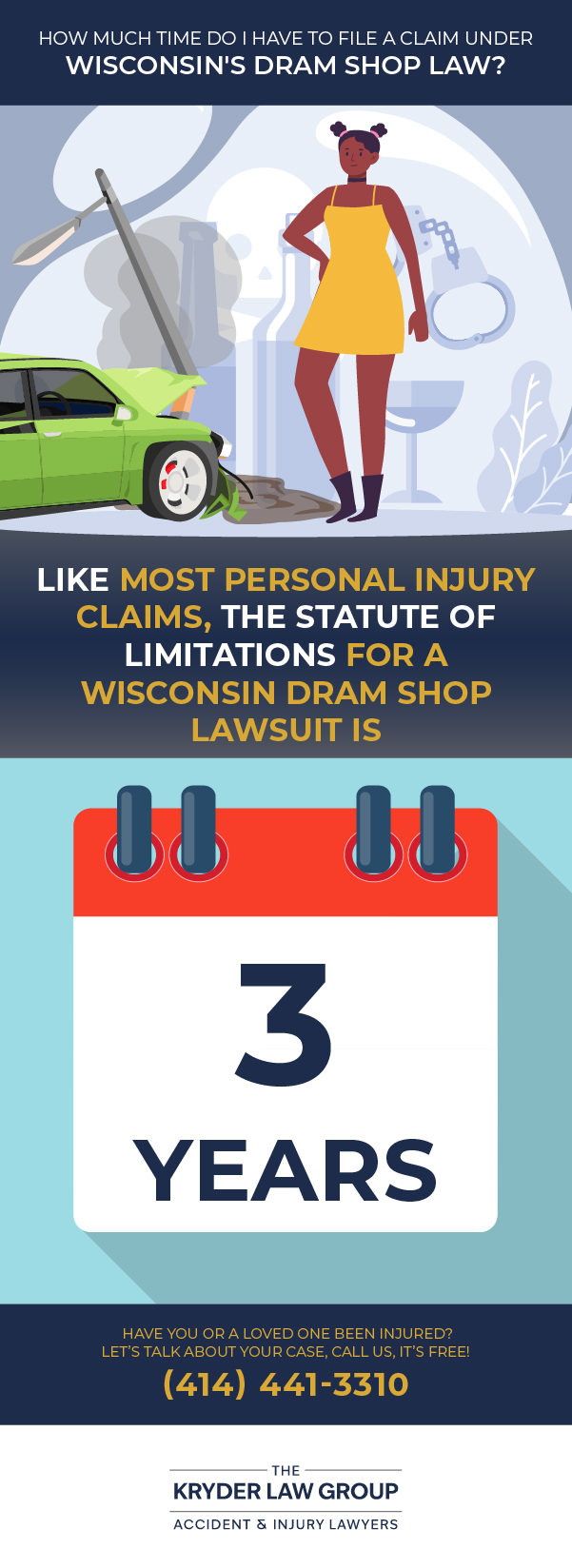
If you or a loved one has been injured by an intoxicated minor, you may have a claim against the liquor store or bar that sold them alcohol. Act quickly since Wisconsin’s three-year statute of limitations for dram shop cases means you must file within three years of the injury.
Common Misconceptions About Wisconsin’s Dram Shop Act
There are myths about how dram shop liability works in Wisconsin. Here are the facts:
Myth: You can sue a bar for overserving an adult who then causes an alcohol-related accident.
Fact: This is false. Vendors who serve alcoholic beverages are immune from liability for injuries caused by intoxicated adults they served, regardless of how drunk the person was. Liability for a drunk driver accident or other alcohol-related harm is almost exclusively limited to cases involving minors.
Myth: A social host at a private party has the same liability as a licensed vendor.
Fact: Wisconsin’s social host liability is covered under a different statute, Wis. Stat. § 125.07. A social host who is of legal drinking age can be held responsible if they provide alcohol to a minor, know the person is a minor, and the alcohol is a substantial factor in causing an injury.
Myth: You have no claim to full compensation for your own injuries if you were a passenger in a car driven by an intoxicated minor.
Fact: Passengers injured by an intoxicated minor may still file a dram shop claim against the establishment that served the alcohol illegally.
Seek Professional Legal Advice
Navigating the legal system after a serious injury or death is a difficult and stressful process for the general public. While the intoxicated individual is directly responsible for the harm they cause, Wisconsin’s dram shop law only provides a specific way to hold negligent businesses—the defendant—accountable for illegally serving underage drinkers.
If you believe you have a case involving serious or permanent injuries or death, call us to understand your legal options and seek compensation for medical bills, lost income, property damage, and more. In the case of a wrongful death, we can hold establishments responsible with compensation for certain family members.
The Wisconsin Dram Shop law could allow people who have been injured by an intoxicated minor to sue the establishment that served or sold that minor alcohol.
Do I have a case?
Phone Number
Fax
Address
134 North LaSalle St., Suite 1515 Chicago, IL 60602 Get Directions
Settlements & Verdicts
$7.5M
$7.5 Million Recovered for a Construction Worker Injured on Site
$3M
$3 Million Recovered for the Family of a Person Struck by a Garbage Truck
$2.2M
$2.2 Million Recovered for a Salesperson Injured in an Automobile Collision
$2M
$2 Million Recovered for a Person Struck by a Speeding Vehicle While Waiting for the CTA Bus
$1.4M
$1.4 Million Recovered for a Computer Programmer Injured in a Slip and Fall
$1M
$1 Million Recovery in just 90 Days for the Family of a Man Killed While Helping a Stranded Motorist


 November 17th, 2025





 (312) 223-1700