

Nursing homes have a duty to provide reasonable quality care to their residents; it is tragic and distressing when you entrust a close family member to a facility only to find they’ve suffered nursing home abuse and neglect. An Indianapolis nursing home abuse lawyer at our personal injury law firm can provide the legal representation you need to manage a nursing home abuse claim. Call for a free case evaluation.
In this Article
How an Indianapolis Nursing Home Attorney Can Help
Our lawyers handle cases for nursing facility abuse victims involving bed sores, malnutrition, falls, medication errors, wrongful death, and more. If you suspect abuse, call us to discuss legal action. We can investigate the facility and gather evidence (relevant medical records, witness statements, and surveillance footage) to ensure those responsible are held liable.
We can also help transfer your loved one to a safer facility to prevent further abuse while seeking financial compensation, taking the facility to court if necessary. In the most extreme cases, we can file a wrongful death claim.
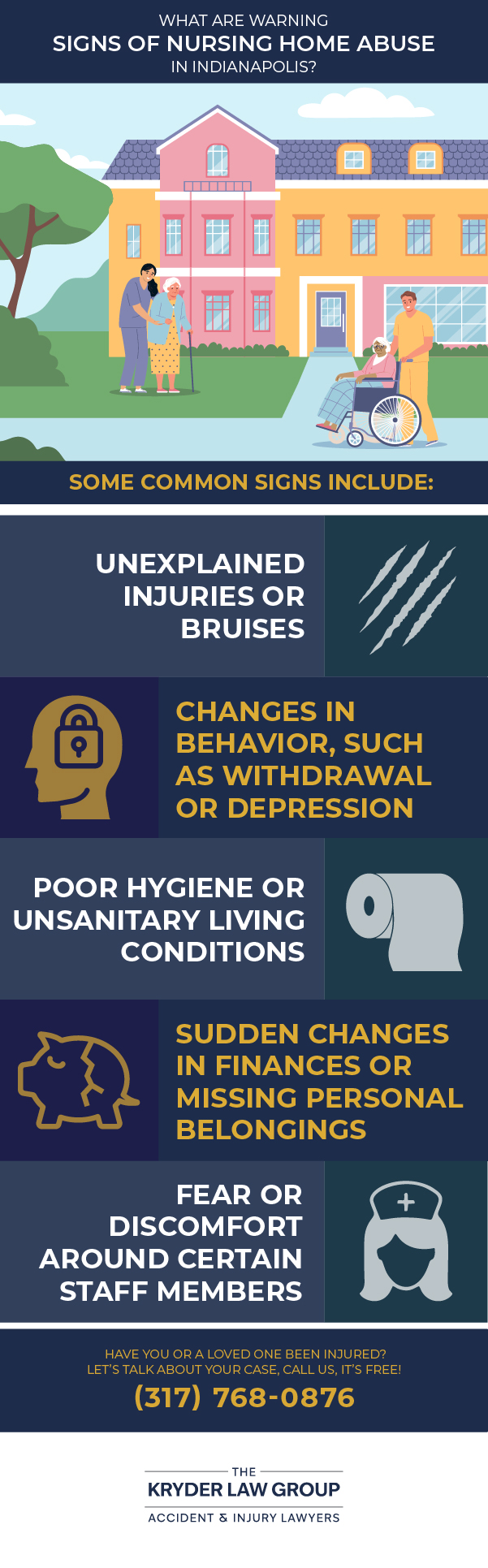
What Are the Warning Signs of Nursing Home Abuse?
Common signs include untreated medical conditions like bedsores, unexplained injuries such as bruises or broken bones, and behavioral changes like withdrawal or depression. Other red flags are rapid weight loss, poor hygiene, unsanitary living conditions, dirty clothes, sudden financial changes, and a resident’s fear around specific staff members.
How Do Federal and State Laws Protect Nursing Home Residents?
The Nursing Home Reform Act of 1987 (NHRA), enacted under the Omnibus Budget Reconciliation Act of 1987 (OBRA ’87), mandates that Medicare- and Medicaid-certified facilities must “promote and protect the rights of each resident.”
Building on federal law, Indiana law protects nursing home patients through a combination of administrative rules, strict laws for health facility standards, and multiple layers of state agency oversight.
Under the Indiana Administrative Code (410 IAC 16.2), all comprehensive care facilities (including elder care facilities) are legally mandated to provide services that maintain or improve each resident’s “highest practicable physical, mental, and psychosocial well-being.
Indiana’s long-term care residents have the right to live safely, be treated with dignity, and remain free from abuse, improper physical restraints, and unnecessary sedatives. They are also entitled to a clean, safe environment, privacy, open communication, choice in medical care, and equal access to treatment.
The Extent of Nursing Home Abuse
Elder abuse is alarmingly high in nursing homes, with the World Health Organization (WHO) reporting two out of three staff members admitting to some form of abuse of elderly people in the past year.
Types of Nursing Home Misconduct and Abuse
Nursing home abuse/neglect by responsible parties or other residents can take many forms:
- Physical abuse—including physical violence like hitting or slapping
- Verbal abuse or emotional abuse—inflicting mental distress through words, actions, or isolating seniors
- Sexual abuse—unwanted sexual contact or activity
- Financial abuse—such as illegal financial exploitation of a resident’s bank accounts
- Elderly patients neglected or not properly cared for—not providing proper medical care, nutrition, hydration, or other personal care
- Medical malpractice—medication errors or failure to treat infections
Steps to Take If You Suspect Nursing Home Abuse or Neglect
If you suspect neglect or abuse, act quickly:
- Seek medical attention from their own doctor and keep detailed records.
- Document any signs of abuse or neglect, including photographs if possible.
- Speak with your loved one privately about their experiences and document their statements.
- Contact the facility’s management and report your concerns.
- Report nursing home abuse by filing a complaint with government agencies (below).
- Consult our Indianapolis nursing home neglect attorneys for legal assistance.
How Do I File a Complaint About Nursing Homes in Indiana?
To report a nursing home in Indiana:
- Submit an official report through the Indiana State Department of Health (IDOH); you may call 1-800-246-8909.
- For an independent advocate to resolve disputes, contact the Indiana Long-Term Care Ombudsman Program or call 1-800-622-4484.
What Damages Might an Abused Resident Recover?
If you or an elderly loved one has suffered emotional or bodily harm in a nursing home, you may be able to hold responsible parties accountable, and you may be entitled to fair compensation. This can include payment for current and future medical costs, physical pain and suffering, and emotional distress. If relocation to a new facility is necessary, those costs may also be recoverable.
How Long Do I Have to File a Nursing Home Abuse Lawsuit in Indiana?
In Indiana, you generally have two years from the date of the nursing home negligence or injury to file a personal injury lawsuit (Indiana Code § 34-11-2-4).
How Can I Prevent Indianapolis Nursing Home Neglect and Abuse?
To prevent nursing home neglect or abuse of elderly patients, be proactive:
- Thoroughly research and choose a reputable nursing home facility.
- Make regular visits to ensure proper care.
- Communicate regularly with nursing home staff and address concerns immediately.
- Know the signs of abuse and monitor for any changes in the resident’s appearance or behavior.
Speak with an Experienced Indianapolis Nursing Home Abuse Attorney
Our Indianapolis nursing home abuse lawyers have helped many families build a strong nursing home abuse case to hold negligent nursing homes accountable for elderly abuse. A compassionate attorney from our law firm can provide legal guidance, investigate your case, prove liability, negotiate with insurers for a fair settlement, and pursue compensation for your loved one’s injuries in court if necessary.
Call Us for a Free Case Review
We offer free consultations to explore your legal options and explain Indiana’s legal process. We work on a contingency fee basis, so you pay no upfront legal fees.










 (312) 223-1700