

St. Louis is home to some of the nation’s most respected universities—Washington University, Saint Louis University (SLU), and the University of Missouri (Mizzou) among them. Every year, students arrive with ambitions, friendships to make, and organizations to join. Fraternities, sororities, athletic teams, and clubs offer community and connection. In most cases, those experiences are positive, and parents can rest assured knowing their children feel safe. But for some families, what began as excitement ends in a child’s devastating injury—or death.
Hazing and bullying incidents continue to cause serious harm on college campuses across Missouri. When injuries happen, families are left scrambling—unsure of their legal rights or where to turn. This guide breaks down what hazing and bullying look like under Missouri law, what steps to take after an incident, and what legal recourse may be available to you with the experienced representation of a St. Louis hazing and bullying lawyer from our personal injury law firm.
In this Article
How Can a Lawyer Help in Cases of Bullying and Hazing in St. Louis?
What Is the Difference Between Hazing and Bullying?
Hazing and bullying are both forms of harassment, but they occur in distinct contexts.
- Hazing typically involves initiation rituals forced on new members of a group—such as a fraternity, sorority, sports team, or club. The goal is often to humiliate, intimidate, or physically harm the new member as a condition of joining.
- Bullying involves repeated aggressive behavior intended to harm, control, or intimidate someone. Bullying can be physical, verbal, or psychological, and it happens in schools, workplaces, and online.
Both can result in lasting physical and emotional damage to victims.
How Common Is Hazing on Missouri College Campuses?
The numbers are sobering. According to the Hazing Prevention Network, 55% of college students involved in clubs, teams, and organizations experience hazing. The majority of incidents go unreported—often because victims fear retaliation or don’t believe anything will be done.
Missouri campuses are not immune. From fraternity and sorority initiations at SLU and Washington University in St. Louis, to athletic team rituals at Mizzou and Missouri State University, hazing can happen anywhere students gather in organized groups. And when it does, the consequences can range from emotional distress to life-threatening injuries.
What Are the Common Types of Hazing in Missouri?
Not all hazing practices look the same. Some behaviors are subtle; others are overtly dangerous and cause psychological or physical harm. Common hazing activities that St. Louis, MO, students may be subjected to include:
- Forced or excessive alcohol consumption
- Sleep deprivation
- Verbal abuse and public humiliation
- Physical or sexual abuse, including being struck or restrained
- Coerced eating or drinking of non-food substances
- Forced nudity or sexual acts
- Personal servitude
- Exposure to dangerous weather conditions
- Pressure to participate in illegal activities
Any one of these acts can cause lasting harm—physically, psychologically, or both.
What Are the Common Types of Bullying in Missouri?
Bullying takes many forms in Missouri schools and on college campuses: physical (hitting, pushing, or damaging belongings), verbal (name-calling, inappropriate comments about a person’s body, offensive language, threats, or repeated humiliation), social (exclusion, spreading rumors, or reputation damage), and cyberbullying (harassment, stalking, or threats through phones, social media, or online platforms). Cyberbullying is increasingly common among Missouri students and can be just as damaging as in-person abuse. Regardless of form, bullying that causes physical injury or serious emotional harm may support a civil legal claim—and a St. Louis bullying attorney can help you understand your options.
Is Hazing Illegal in Missouri?
Missouri law prohibits hazing under Mo. Rev. Stat. § 578.365, which defines the offense as a willful act that recklessly endangers the mental or physical health or safety of a student for the purpose of initiation, admission, or maintaining membership in an organization. Notably, a victim’s consent typically does not defend against hazing charges in Missouri—meaning a perpetrator can still be held liable even if the victim willingly agreed to participate. Under Missouri law, hazing is generally classified as a Class A misdemeanor. However, if the act creates a substantial risk to the student’s life, the offense is elevated to a Class D felony. Violations can result in criminal charges, fines, and civil liability.
Missouri’s law, known as “Danny’s Law,” grants limited criminal immunity to the first person who calls emergency services during a hazing incident, provided they remain onsite and cooperate with authorities. While encouraging immediate medical intervention, the law does not protect callers from other criminal charges or prevent civil lawsuits.
Missouri’s anti-hazing statute also extends liability to student organizations that authorize or encourage hazing conduct. That means the group itself—not just the individuals involved—can face legal consequences.
What Does the Jeanne Clery Campus Safety Act Require?
In addition to state law, the Jeanne Clery Campus Safety Act requires all colleges and universities receiving federal student aid to:
- Include hazing incidents in their annual crime reports
- Publicly disclose organizations disciplined for hazing
- Implement research-based hazing prevention programs
Every major higher education institution in Missouri—including SLU, Washington University, and Mizzou—has policies explicitly prohibiting hazing. Violations can lead to suspension, expulsion, or removal of an organization’s official recognition, on top of any criminal or civil consequences.
What Should You Do If Your Child Is Injured in a Hazing Incident?
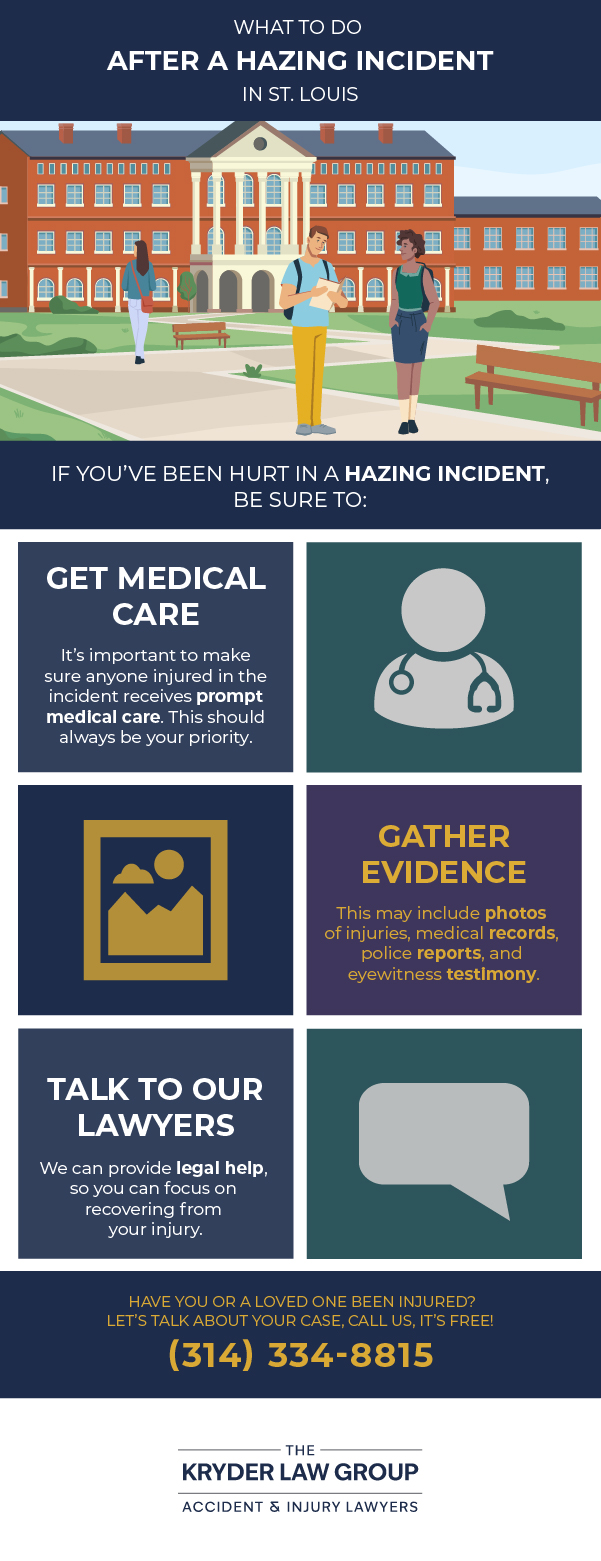
If your child has been hurt as a result of hazing or bullying, the steps you take immediately after can make a significant difference in any legal claim.
- Seek medical treatment first. Your child’s health and safety come before anything else. Document all injuries and keep records of every medical visit.
- Gather evidence. Photos of injuries, medical records, text messages, social media posts, police reports, and eyewitness accounts can all support your case.
- Report the incident. Notify the school’s administration, campus police, or local law enforcement in St. Louis, depending on the circumstances.
- Contact a St. Louis personal injury lawyer. An attorney from our law firm can help you understand your legal options, communicate with the university and insurance companies, and fight for the compensatory damages your family deserves.
What Resources Are Available for Missouri Families?
If you’re looking for more information on hazing prevention or reporting, these resources are a good starting point:
- Hazingprevention.org—a guide to state hazing laws, prevention tools, and support resources
- SLU Student Responsibility and Community Standards—SLU’s official student conduct policies
- Washington University Student Affairs—information on student rights, wellness, and reporting procedures
- University of Missouri Office of Student Conduct—Mizzou’s policies on student organizations and hazing
- Parental Responsibility and Bullying Laws Across the United States—an overview of how bullying laws and parental responsibility vary by state
Tips for Students Considering Greek Life or Joining a Campus Organization
If your student is thinking about pledging a fraternity or sorority at a St. Louis-area campus, a little preparation can go a long way:
- Research the organization before committing. Look into their values, reputation, and history on campus.
- Talk to current and former members to get an honest picture of the pledging process.
- Attend only official, sanctioned events. Avoid unofficial or secretive gatherings.
- Trust your instincts. If something feels wrong, it probably is—and speaking up is always the right call.
When Should You Talk to a St. Louis Hazing and Bullying Lawyer?
Consider speaking with our legal team if your child has suffered a physical injury, emotional trauma, or any other serious harm as a result of hazing or bullying at a St. Louis-area school. Legal claims in these cases can be brought against individual perpetrators, student organizations, and even educational institutions or their employees that failed to prevent known risks.
A St. Louis personal injury lawyer can help you:
- Understand Missouri’s legal process
- Evaluate the strength of your case during a free consultation
- Gather and preserve evidence before it disappears
- Negotiate with insurance companies and opposing counsel
- Pursue maximum compensation for medical bills, pain and suffering, and long-term care
No family should have to navigate this process alone—especially while supporting a child through trauma.
Moving Forward After a Serious Injury from Hazing or Bullying
Hazing and bullying are not harmless traditions or rites of passage. They are harmful, often illegal acts—and Missouri law gives victims real recourse with litigation. Knowing your rights is the first step toward getting justice.
If your child was hurt in a hazing or bullying incident at a St. Louis school, don’t wait to get answers. The sooner you speak with a hazing and bullying lawyer, the better positioned you’ll be to protect your family’s legal rights. Call for a free case review today.
Frequently Asked Questions
Here are some frequently asked questions about St. Louis bullying and hazing cases.
What is the difference between hazing and bullying in Missouri?
Hazing involves coercive initiation rituals tied to joining a group, while bullying is repeated aggressive behavior intended to intimidate, harm, or create a hostile environment. While the line between them can sometimes blur, both can result in physical abuse and psychological harm, and both may give rise to civil legal claims under Missouri law.
When should I talk with an attorney about a hazing or bullying case in Missouri?
If your child has suffered physical or emotional harm from hazing or bullying, don’t wait to get help. Our legal team has spent decades fighting for victims and their families—pursuing claims against the individuals and institutions responsible, and arguing the case in court when needed. We’re here to support you every step of the way, especially when dealing with the legal teams hired to defend the individuals accused.
Can a school or university in Missouri be held liable for hazing injuries?
Potentially, yes. If a school knew or should have known about hazing activity and failed to take action, or if their internal investigation reveals they violated their own safety policies, the institution may share liability for resulting injuries. Each case is fact-specific, and a St. Louis hazing and bullying attorney can assess whether the institution bears responsibility.
What is Missouri’s statute of limitations for filing a hazing lawsuit?
Missouri’s general personal injury statute of limitations is five years from the date of the injury. However, certain factors—such as the victim’s age or specific circumstances of the case—can affect that timeline. Consulting with our legal team promptly helps preserve your options.
What compensation can hazing victims recover through a claim in Missouri?
Hazing victims may be entitled to compensation for medical expenses, psychological counseling, lost income (for adults or parents), pain and suffering, and (in some cases) punitive damages if the conduct was particularly egregious.
What should I do if my child is afraid to report hazing at their St. Louis school?
Fear of retaliation is common. Start by documenting what happened and consulting a lawyer privately—you don’t need to take any public action to get legal advice. An attorney can represent clients in discussions with school administrators and help you understand your options before deciding how to proceed.










 (312) 223-1700